Doing Business in Africa 2026: AfCFTA Guide for Gulf Traders
Africa drew $70bn of FDI in 2025 and intra-African trade hit $213.8bn. How the AfCFTA, UAE CEPAs and Gulf ports open the market for Gulf and Omani traders.
Doing business in Africa in 2026 means selling into a market of about 1.4 billion people that is slowly becoming one trading area under the African Continental Free Trade Area (AfCFTA), while Gulf ports, banks and investors build the routes that connect it to the Middle East. For Gulf traders, the practical opportunity lies in a few hub countries, in goods that qualify for AfCFTA rules of origin, and in the new UAE–Africa trade agreements. The main risks are uneven implementation, currency and payment friction, and logistics costs.
Key takeaways
- Africa attracted about $70 billion of foreign direct investment in 2025, the third-highest level since 1990, according to UNCTAD's World Investment Report 2026. Egypt was the largest recipient at about $15 billion.
- Intra-African trade grew 5.5% to about $213.8 billion in 2025, and Africa's total merchandise trade rose 6.1% to about $1.5 trillion (Afreximbank, African Trade Report 2026).
- 50 countries have ratified the AfCFTA, covering roughly 1.4 billion people and $3.4 trillion of combined GDP (AfCFTA Secretary-General Wamkele Mene, September 2026).
- The UAE–DR Congo trade agreement (CEPA) entered into force on 30 October 2026, removing tariffs on most products. It is the newest in a series of UAE agreements with African states.
- For Gulf and Omani traders, the practical entry routes are hub markets (Kenya, Egypt, Morocco, South Africa, Côte d'Ivoire), port-linked logistics, and partners who already know local import rules.
Why is Africa on every Gulf investor's agenda in 2026?
Three trends meet. First, money is already flowing. UNCTAD's World Investment Report 2026 puts FDI into Africa at about $70 billion in 2025. That is lower than the exceptional $94 billion of 2024 but still roughly a third above the long-term average. North Africa remained the largest destination, and UNCTAD notes that the value of announced greenfield projects fell by almost a third even though the number of projects increased.
Second, Gulf capital is a large part of that story. According to the UAE Ministry of Economy and Tourism, as reported by Gulf News in September 2026, the UAE invested more than $110 billion in African projects between 2019 and 2023, over $70 billion of it in renewable energy. The UAE is regularly described as Africa's fourth-largest source of foreign investment, after the United States, China and the European Union.
Third, the continent needs exactly what Gulf groups build: ports, power, logistics parks and food supply chains. The African Development Bank estimates that Africa needs about $170 billion a year for infrastructure but invests only $80–90 billion, as reported by Global Finance magazine in 2026.
What is the AfCFTA and how far has it come?
The African Continental Free Trade Area is an agreement to remove most tariffs between African countries and to harmonise rules on trade in goods and services. Its basic tariff structure is often summarised as 90/7/3: about 90% of tariff lines are to be liberalised, 7% are "sensitive" products with longer phase-down periods, and 3% can be excluded.
Progress is real but uneven. Ratifications have reached 50 countries, with Somalia among the most recent, according to the AfCFTA Secretary-General speaking at the AIM Congress in 2026. Fewer countries have published the customs documents that let traders actually claim AfCFTA tariff rates, so the agreement works well on some corridors and hardly at all on others. The Pan-African Payment and Settlement System (PAPSS), which lets buyers and sellers settle in local currencies, now operates in more than 30 countries and connects 24 central banks and over 200 commercial banks and payment providers, according to an October 2026 trade briefing by MRX.
For a Gulf company, the key point is this: AfCFTA preferences apply to goods that originate in Africa. A product shipped from Jebel Ali or Sohar does not get AfCFTA rates just because it enters Kenya first. What the agreement rewards is assembly, processing or manufacturing inside an AfCFTA member, which then sells across borders.
How big is the African market in numbers?
The table below collects the headline figures that matter for trade and investment planning. Each figure comes from the source named, for the year shown.
| Indicator | Figure | Year | Source |
|---|---|---|---|
| FDI inflows to Africa | about $70 billion | 2025 | UNCTAD, World Investment Report 2026 |
| Largest FDI recipient | Egypt, about $15 billion | 2025 | UNCTAD, World Investment Report 2026 |
| Africa's merchandise trade | about $1.5 trillion (+6.1%) | 2025 | Afreximbank, African Trade Report 2026 |
| Intra-African trade | about $213.8 billion (+5.5%) | 2025 | Afreximbank, African Trade Report 2026 |
| Real GDP growth (Africa) | 4.5% (from 3.4% in 2024) | 2025 | Afreximbank, African Trade Report 2026 |
| Average inflation (Africa) | 13.1% (from 21.6%) | 2025 | Afreximbank, African Trade Report 2026 |
| UAE investment in African projects | over $110 billion | 2019–2023 | UAE Ministry of Economy and Tourism |
| UAE–DR Congo non-oil trade | $3.5 billion (+38.5%) | 2025 | UAE announcement, via Khaleej Times |
| Oman trade with sub-Saharan Africa | just under $4 billion | 2023 | World Bank WITS, via Oman Observer |
Two points stand out: intra-African trade is still small relative to total trade, and inflation has eased sharply, which makes pricing more predictable.
Which African markets suit Gulf traders best?
There is no single "African market". Most Gulf exporters start with one hub per region and expand from there.
- East Africa (Kenya, Tanzania, Ethiopia). Historic trade links with Oman and the UAE, direct shipping and air connections, and a growing middle class. Kenya signed a CEPA with the UAE in January 2025, the UAE's first such agreement with a mainland African country. Kenya already exports meat, fruit, vegetables and flowers to the UAE, according to Kenya's Ministry of Foreign Affairs.
- North Africa (Egypt, Morocco). The largest FDI destinations in 2025 according to UNCTAD, with industrial zones, renewable-energy projects and logistics hubs facing both Europe and Africa.
- Central Africa (DR Congo). Rich in copper and cobalt and now covered by the UAE–DRC CEPA from 30 October 2026, which removes tariffs on the vast majority of product lines.
- West Africa (Côte d'Ivoire, Senegal, Nigeria, Ghana). Large consumer markets. Afreximbank reports that Côte d'Ivoire accounted for about 4.8% of intra-African trade in 2025, and Nigeria's intra-African trade grew strongly.
- Southern Africa (South Africa). The most diversified economy and the biggest player in intra-African trade, with about 19.2% of the total in 2025 according to Afreximbank.
What role do Gulf ports and Oman play?
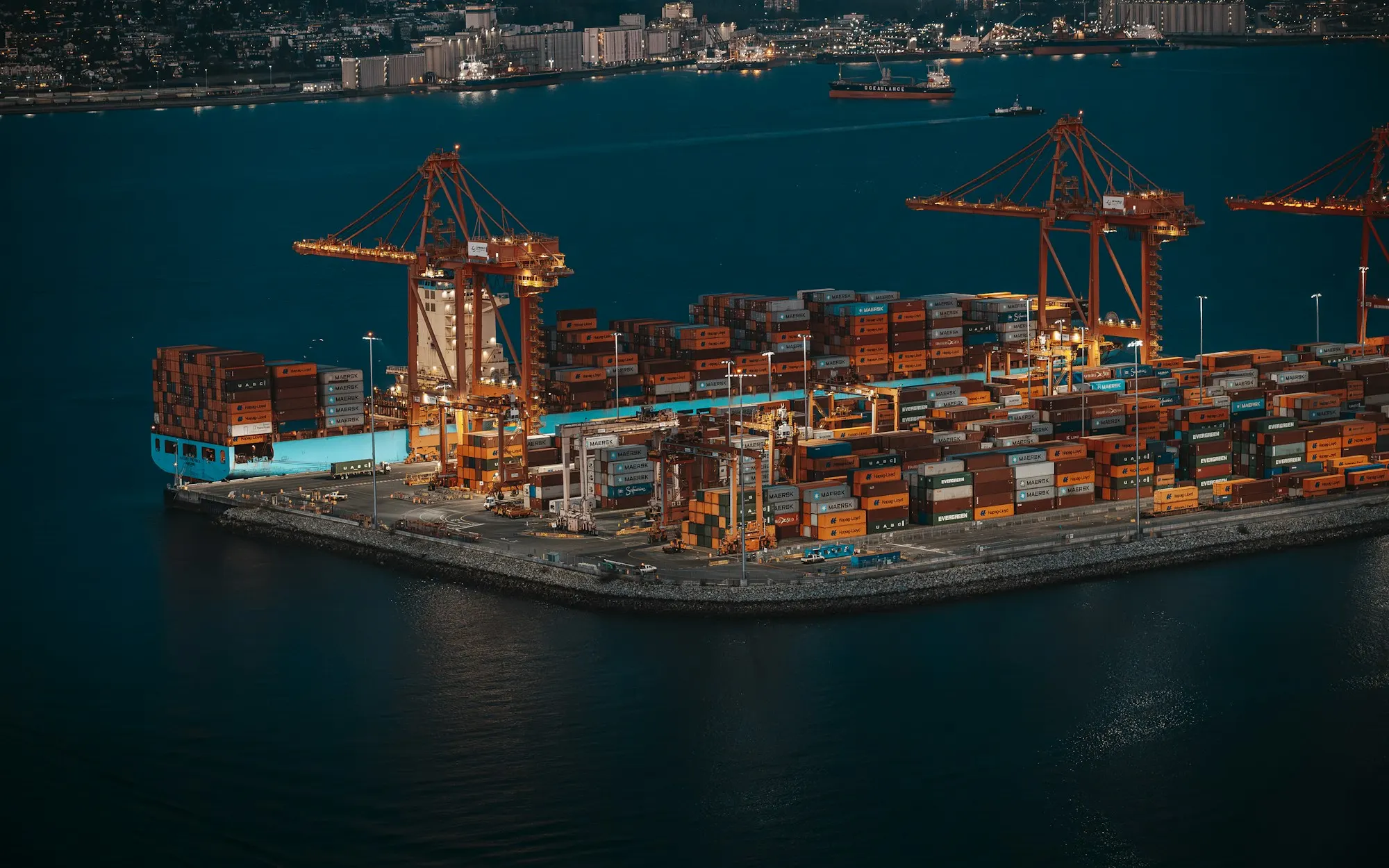
Gulf port operators have become the physical backbone of Gulf–Africa trade. DP World operates ports and logistics sites across the continent, including a 30-year concession at Dar es Salaam, and is building the Ndayane port in Senegal. AD Ports Group holds concessions in Egypt, Angola and the Republic of Congo, and in 2026 joined a 30-year concession in Douala, Cameroon. For traders, this means more direct services and better container availability.
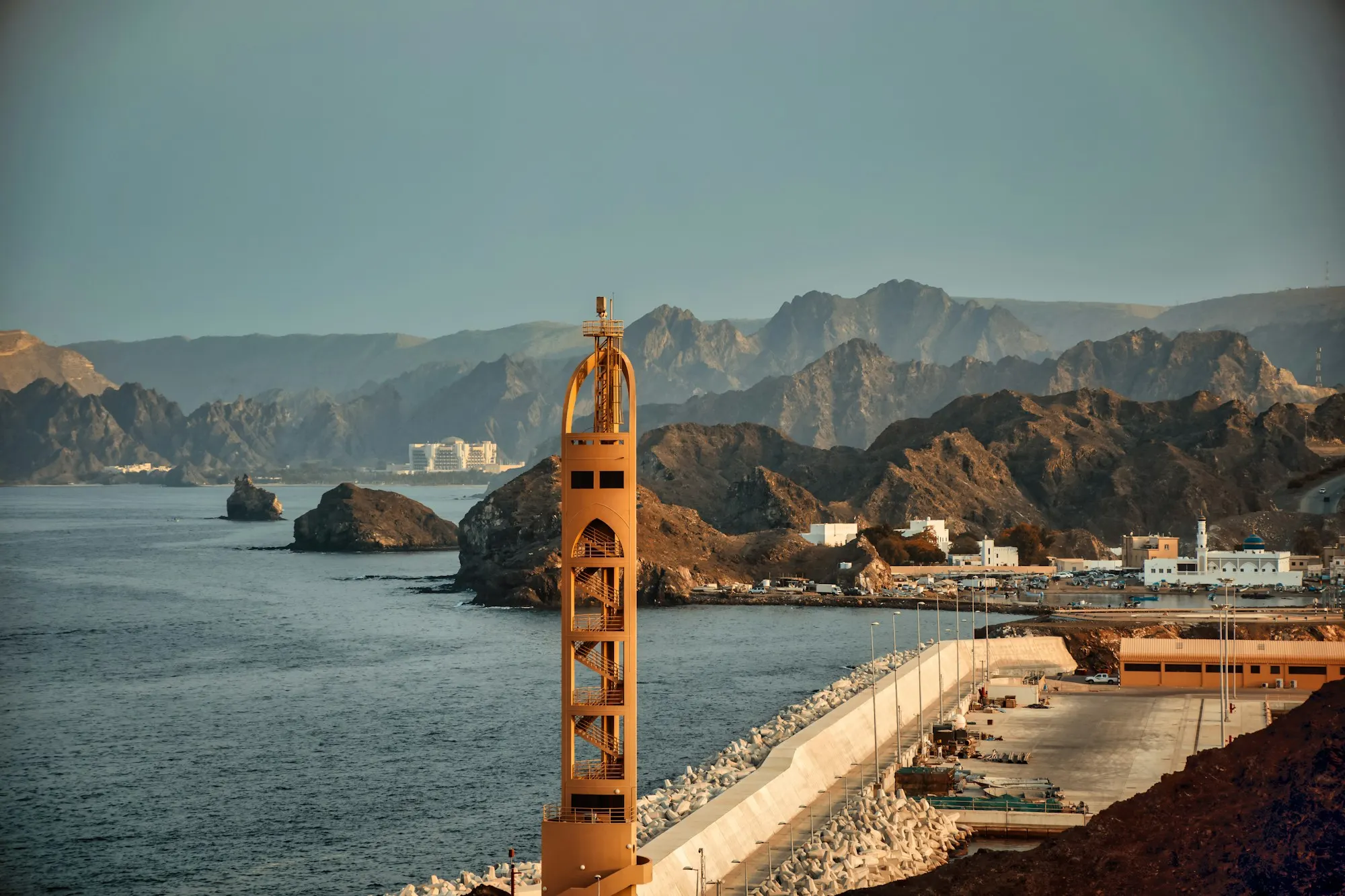
Oman has its own advantages. Its ports face the Arabian Sea and the Indian Ocean, and the Port of Salalah offers an 18-metre navigation depth. In September 2026 Salalah hosted the second Omani Afro-Chinese Business Forum under the free zones authority (OPAZ), with delegations from Somalia, Eritrea, Ethiopia, Kenya, Tanzania, Sudan and Djibouti, according to the Oman Observer. SalamAir also launched a direct Muscat–Mogadishu route in September 2026. See our guide to the Port of Salalah and Salalah Free Zone.
How do you actually start trading with Africa?
A practical sequence for a Gulf or Oman-based business looks like this:
- Pick one corridor. Choose a hub country where you already have shipping links, buyers or diaspora networks, rather than "Africa" as a whole.
- Check tariffs and agreements. Find out whether your goods enter under standard tariffs, a UAE CEPA or AfCFTA preferences, and what certificate of origin each requires.
- Test demand with a distributor. Many first shipments go through an established importer or distributor before a company registers locally.
- Plan payments. Use letters of credit or trusted payment partners, and check whether local-currency settlement (for example through PAPSS-connected banks) is available on your corridor.
- Use free zones for flexibility. Gulf free zones let you hold stock close to Africa and consolidate cargo from several suppliers, including suppliers in China. Our guide on sourcing from China for Gulf importers covers that side of the chain.
- Consider local value-add later. If a market works, local assembly or processing inside an AfCFTA country is how you unlock tariff-free access to its neighbours.
What are the main risks?
- Uneven implementation. AfCFTA rules exist on paper in more places than they work at the border. Customs practice can differ from the published schedule.
- Currency and payments. Exchange-rate swings and shortages of hard currency in some markets can delay payment. Credit insurance and conservative terms help.
- Logistics costs. Inland transport is often more expensive than the sea freight itself, especially for landlocked countries.
- Regulatory and political risk. Rules on imports, foreign ownership and repatriation of profits change, and security conditions vary sharply between and within countries.
- Concentration of benefits. Analysts at Chatham House have warned that Gulf–Africa deals can become unbalanced. Partnerships that create local jobs and skills tend to be more durable.
This article is general information only and is not investment, legal or tax advice. Rules and tariffs change, so confirm details with the relevant authorities and qualified advisers before you act.
How Yazdan Invest can help
Yazdan Invest is headquartered in Muscat and trades with a network of more than 290 traders, mainly in Saudi Arabia and the wider Arab region, and the group is now entering Africa. We have sourcing agents in China, a representative in Dubai, and raw-material contracts in India, so we can help connect African buyers with Gulf and Asian supply. Through Oman Register we also assist with company formation in Oman for businesses that want a base close to East Africa. Learn more about our international trade network or contact our team on +968 7733 3556.
Frequently asked questions
What is the AfCFTA in simple terms?
It is Africa's continental free trade agreement. Member countries are gradually removing most tariffs on goods traded between them and aligning rules on customs, services and investment. As of September 2026, 50 countries had ratified it.
Can goods from the Gulf benefit from AfCFTA tariff cuts?
Not directly. AfCFTA preferences apply only to goods that meet African rules of origin. Gulf goods pay normal tariffs unless a separate agreement applies, such as a UAE CEPA with that country. Processing or assembly inside an AfCFTA member can change that.
Which African country received the most foreign investment in 2025?
Egypt, with about $15 billion of FDI inflows in 2025, according to UNCTAD's World Investment Report 2026. North Africa as a whole remained the largest subregion for investment.
Which UAE trade agreements with African countries are in force?
The UAE has signed CEPAs with several African states, including Kenya in January 2025. The UAE–DR Congo CEPA entered into force on 30 October 2026. Check the UAE Ministry of Economy and Tourism for the latest list of agreements in force.
Is Oman a good base for trading with East Africa?
Oman has long trade ties with East Africa, Indian Ocean ports such as Salalah, free zones and new air links such as Muscat–Mogadishu. Whether it suits your business depends on your products, suppliers and target markets.
Sources
- Africa is attracting investment in strategic industries — UNCTAD, World Investment Report 2026
- Continental trade surges to $1.5trn as intra-African commerce hits $213.8bn — Leadership (Afreximbank African Trade Report 2026)
- Afreximbank: Intra-African trade rises 5.5% to $213.8 billion — Nairametrics
- AIM Congress 2026: Africa looks to Gulf investors — Gulf News
- Gulf Investors Fill Africa's Infrastructure Gap — Global Finance
- UAE-Congo CEPA enters into force — Khaleej Times
- How the UAE-Kenya CEPA is advancing shared growth — AllAfrica / Capital FM
- Africa Trade Briefing, October 2026 — MRX
- Gulf investment in Africa: opportunity, asymmetry and the risk of dependence — Chatham House
- Salalah forum adds China to Oman-Africa investment push — Oman Observer