Investing in Vietnam 2026: FDI Boom, New Law and Gulf Trade
Vietnam's registered FDI hit US$54.85bn in Jan–Oct 2026 (+74%). Sectors, top investors, the new investment law and the UAE–Vietnam CEPA explained.
Vietnam is one of the strongest foreign investment stories of 2026: registered foreign direct investment (FDI) reached US$54.85 billion in January–October 2026, up 74% year on year and the highest for that period since 2009, according to Vietnam's National Statistics Office (NSO). For investors from the Gulf, the timing matters twice over: a new Law on Investment took effect on 1 March 2026, and the UAE–Vietnam CEPA has been in force since 3 February 2026.
Key takeaways
- Registered FDI hit US$54.85 billion in the first ten months of 2026 (+74.0%), while disbursed capital reached US$24.08 billion (+13.1%), according to the NSO.
- Manufacturing dominates: it absorbed 82.9% of disbursed FDI in Jan–Oct 2026, and transport and warehousing drew 16.7% of new-project capital.
- Vietnam's goods trade passed US$1 trillion in ten months for the first time (US$1,010.55 billion, NSO, 2026), with foreign-invested firms producing 81.2% of exports.
- The Law on Investment 2025 (effective 1 March 2026) lets foreign investors set up a company before receiving an investment registration certificate and cuts 38 conditional business lines.
- The UAE–Vietnam CEPA removes tariffs on 99% of Vietnamese-origin exports to the UAE and 98.5% of UAE-origin goods into Vietnam (UAE Ministry of Economy).
Why is foreign investment in Vietnam surging in 2026?
The headline number is unusual even by Vietnam's standards. According to the NSO's October 2026 socio-economic report, registered FDI rose to US$54.85 billion in the ten months to 31 October, a 74.0% increase on the same period of 2025. VietnamPlus, the national news agency's English service, described it as the strongest ten-month growth since 2009.
Three forces stand out in the data. First, new projects are much larger: newly licensed capital reached US$30.73 billion, about 2.2 times the 2025 level, even though the number of projects (3,478) grew only 4.7%, according to figures from the Foreign Investment Agency reported by Vietnam Briefing. Second, existing investors are expanding, adding US$16.13 billion (+33.2%) across 1,079 projects. Third, acquisitions are rising: capital contributions and share purchases were worth US$7.99 billion (+49.6%) across 2,616 transactions.
Behind these numbers is Vietnam's position as a manufacturing base for companies diversifying supply chains across Asia, a large domestic market, and a government that has spent 2025–2026 simplifying investment procedures.
| Indicator (Jan–Oct 2026) | Value | Change y/y |
|---|---|---|
| Total registered FDI | US$54.85 bn | +74.0% |
| New projects (3,478) | US$30.73 bn | about 2.2x |
| Capital increases (1,079 projects) | US$16.13 bn | +33.2% |
| Share purchases (2,616 deals) | US$7.99 bn | +49.6% |
| Disbursed FDI | US$24.08 bn | +13.1% |
*Sources: NSO (November 2026); Foreign Investment Agency via Vietnam Briefing (November 2026).*
Registered capital shows intentions; disbursed capital shows money actually spent. In 2026 disbursement grew far more slowly (+13.1%) than registrations (+74%), so many announced projects are still at an early stage.
Which sectors attract the most investment in Vietnam?
Manufacturing is the backbone. Of the US$24.08 billion disbursed in January–October 2026, processing and manufacturing took US$19.96 billion (82.9%), real estate US$1.76 billion (7.3%), and electricity, gas and air-conditioning supply US$785.2 million (3.3%), according to the NSO.
For new projects, manufacturing drew US$14.61 billion (47.5%), and transport and warehousing drew US$5.15 billion (16.7%), a sign that logistics capacity is becoming an investment theme in its own right. When new and expanded projects are combined, VietnamPlus reports manufacturing at US$24.19 billion (51.6%) and real estate at US$7.08 billion (15.1%).
Acquisitions show a different pattern: professional, scientific and technology activities accounted for US$2.78 billion (34.8%) of share-purchase capital, and wholesale and retail trade for US$2.17 billion (27.1%), according to VietnamPlus (2026). For a trader or distributor, buying into an existing Vietnamese business is clearly a common route.
Who are the biggest investors in Vietnam?
Asian capital leads. For new projects in January–October 2026, the Foreign Investment Agency data reported by Vietnam Briefing ranks the sources as follows:
| Investor economy | New-project capital (Jan–Oct 2026) | Share |
|---|---|---|
| Singapore | US$9.52 bn | 31.0% |
| South Korea | US$5.81 bn | 18.9% |
| Luxembourg | US$4.99 bn | 16.2% |
| Hong Kong | US$3.57 bn | 11.6% |
| China | US$2.77 bn | 9.0% |
| Japan | US$1.58 bn | 5.1% |
Rankings use the jurisdiction of the direct investor, so hubs such as Singapore, Luxembourg and Hong Kong often channel money that originates elsewhere. Gulf investors appear modestly in these tables today, which is exactly why the new UAE trade agreement is worth watching.
What changed in Vietnam's Law on Investment 2025?
The National Assembly passed the Law on Investment 2025 on 11 December 2025, replacing the 2020 law. Most of it took effect on 1 March 2026; the rules on conditional business lines followed on 1 July 2026, according to the government's investment promotion portal (Invest Vietnam) and law firm DFDL (2026). The changes most relevant to foreign investors are:
- Company first, certificate later. Foreign investors that meet market-access conditions may establish a company before the investment registration certificate (IRC) is issued, which Invest Vietnam says should significantly shorten market entry. Implementing guidance from the government still matters here.
- Fewer projects need policy approval. The law lists 20 categories that still need investment policy approval, such as large land conversions, casinos, nuclear power or telecoms with network infrastructure.
- A "special investment procedure" in industrial parks, export processing zones, high-tech zones, free trade zones and similar areas replaces several approvals (including environmental impact reports and construction permits) with a written commitment to meet standards, unless the project needs policy approval.
- Fewer conditional business lines. 38 lines were removed and 20 adjusted; Invest Vietnam puts the list at 198 sectors, with more sectors moving from "licence before operating" to post-inspection.
- Simpler project changes. A change of 20% or more in total capital no longer triggers a policy adjustment, and all projects holding an approval or IRC can now be transferred.
- Operating terms. Projects can run up to 50 years, or 70 years in economic zones, with the term adjustable during implementation.
Tax incentives, land rules and sector licences sit in other laws and decrees, so investors should confirm the regime for their specific project with licensed advisers.
How does Vietnam's trade boom affect sourcing and supply chains?
Vietnam's goods trade crossed US$1 trillion in ten months for the first time: US$1,010.55 billion in January–October 2026, up 32.3%, according to the NSO. Exports reached US$499.24 billion (+27.5%) and imports US$511.31 billion (+37.4%), leaving a deficit of US$12.07 billion as factories imported more machinery and components.
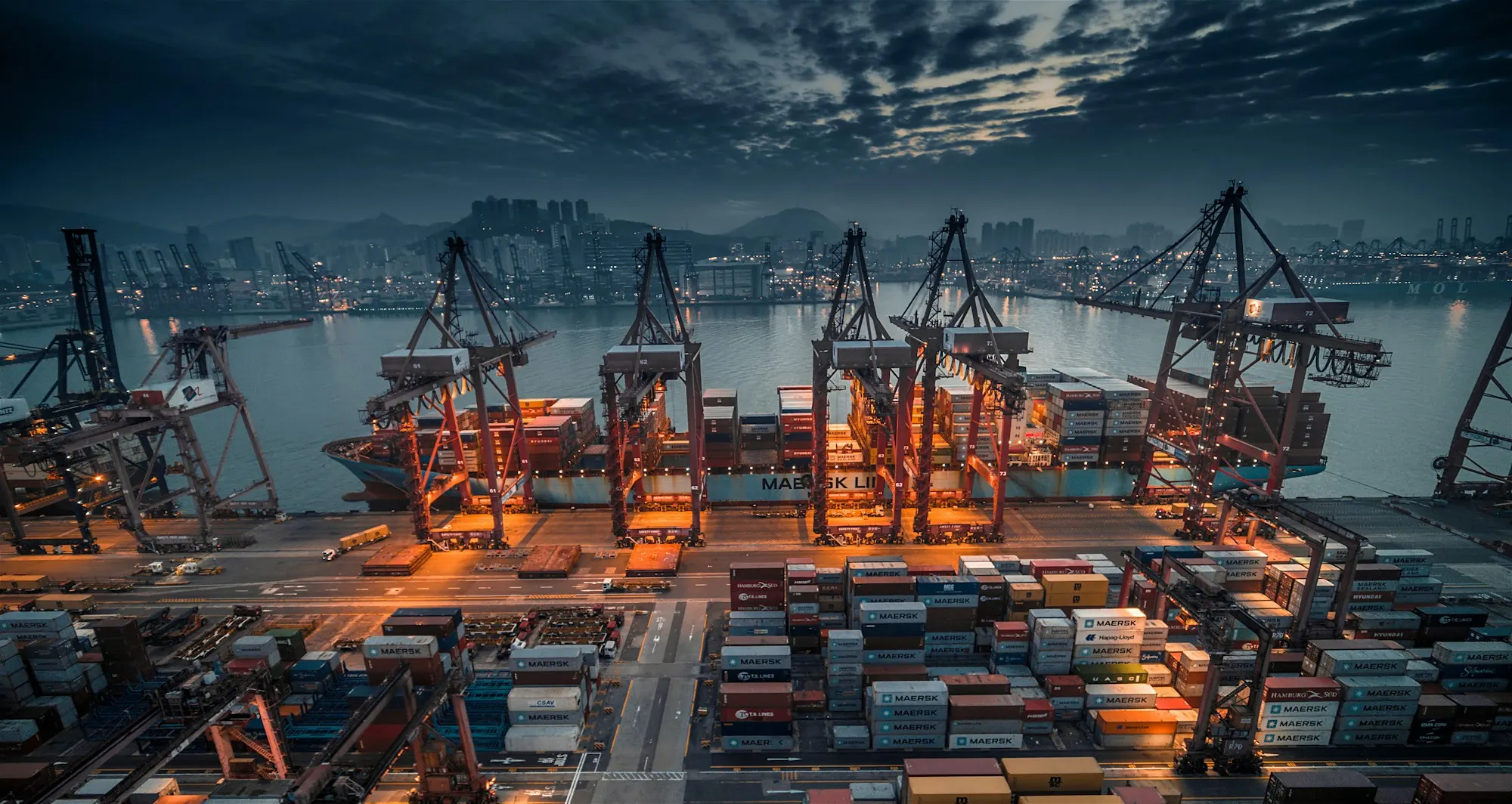
Two figures explain the structure. Foreign-invested companies produced US$405.31 billion, or 81.2% of exports, and the United States remained the largest export market at US$159.40 billion, while China was the biggest supplier of imports at US$212.46 billion (NSO, 2026). For buyers, this means Vietnam offers a wide manufacturing base in electronics, textiles, footwear, furniture and food, but much of it depends on imported inputs and on demand in a few large markets. Exposure to changes in US trade policy is a risk worth tracking.
For Gulf importers already buying from China, Vietnam is a natural second source. Our guide to sourcing from China for Gulf importers covers supplier checks that apply equally in Vietnam.
What does the UAE–Vietnam CEPA mean for Gulf businesses?
The UAE–Vietnam Comprehensive Economic Partnership Agreement was signed on 28 October 2024 and entered into force on 3 February 2026. It is Vietnam's first free trade agreement with an Arab country. According to the UAE Ministry of Economy, the UAE will remove tariffs on 99% of Vietnamese-origin exports and Vietnam on 98.5% of UAE-origin goods, with more than 95% of qualifying goods (including goods made in UAE free zones) freed immediately. Vietnamese officials quoted by VOV (October 2026) describe a phased schedule by tariff line, so importers should check the exact rate for each HS code.
Trade was already growing before the deal. UAE official data cited by Middle East Briefing show non-oil trade rising from US$12.6 billion in 2024 to US$16.05 billion in 2025 (+27.4%). VOV reports Vietnam's exports to the UAE at US$5.91 billion in 2025, led by iron and steel, cashew nuts, vehicles, and fruit and vegetables.
Early moves include LuLu Group's sourcing office in Ho Chi Minh City and an AD Ports Group memorandum with Vingroup, according to Middle East Briefing (July 2026). For Oman- and Saudi-based traders, the agreement mainly matters through the UAE as a regional re-export and distribution hub.
How can a foreign company enter the Vietnamese market?
Most Gulf companies choose one of four routes, as summarised by Middle East Briefing (2026):
| Entry route | Best for | Key point |
|---|---|---|
| Export via a distributor | Testing demand | Lowest capital, least control |
| Representative office | Sourcing, research, supplier management | Cannot earn revenue directly |
| Foreign-invested company | Manufacturing, trading, services | Needs an IRC and an enterprise registration certificate (ERC) |
| Joint venture or acquisition | Faster access to licences, land and customers | Requires careful due diligence |
A practical sequence for a trader is: start with a supplier network and a representative or agent on the ground, validate products and quality, and only then commit capital to a company, a warehouse or a production line. Choosing an industrial park eligible for the new special investment procedure can reduce approval steps for manufacturing projects.
Readers comparing Southeast Asian options may also find our Thailand BOI investment guide useful.
How Yazdan Invest can help
Yazdan Invest is an international investment group headquartered in Muscat, with representatives and sourcing agents in China, a representative in Dubai and a network of more than 290 traders across Saudi Arabia and the Arab region. We help partners compare sourcing markets, connect with suppliers, and plan trade and production projects, and we are studying research and investment projects in Southeast Asia through our Thailand research project. To discuss sourcing or market entry in Asia, contact our team or call +968 7733 3556.
This article is general information only and is not investment, legal or tax advice.
Frequently asked questions
How much foreign investment did Vietnam attract in 2026?
Registered FDI reached US$54.85 billion in January–October 2026, up 74.0% year on year, according to the NSO. Disbursed FDI, the money actually spent, was US$24.08 billion, up 13.1%.
Can a foreigner own 100% of a company in Vietnam?
Many sectors allow full foreign ownership, but some conditional or restricted sectors limit foreign shares or require extra licences. The Law on Investment 2025 cut the conditional list by 38 lines, so check the current list for your business activity before choosing a structure.
When did Vietnam's new investment law take effect?
The Law on Investment 2025 took effect on 1 March 2026, with the rules on conditional business lines taking effect on 1 July 2026. It replaced the Law on Investment 2020.
Is there a free trade agreement between the UAE and Vietnam?
Yes. The UAE–Vietnam CEPA entered into force on 3 February 2026. It removes tariffs on 99% of Vietnamese-origin exports to the UAE and 98.5% of UAE-origin goods into Vietnam, according to the UAE Ministry of Economy.
Which sectors in Vietnam are best for foreign investors?
By the numbers, manufacturing is dominant, taking 82.9% of disbursed FDI in Jan–Oct 2026, followed by real estate and energy. Transport and warehousing is a fast-growing area for new projects. The right sector depends on your own capabilities and risk appetite.
Sources
- Report on socio-economic performance in October and 10 months of 2026 — National Statistics Office of Vietnam
- Vietnam's Registered FDI Rises 74 Percent to US$54.85 Billion in January–October 2026 — Vietnam Briefing
- Vietnam's 10-month FDI inflows post strongest growth since 2009 — VietnamPlus
- Viet Nam's import-export turnover surpasses USD 1 trillion in 10 months of 2026 — Ministry of Industry and Trade
- Starting from March 1, 2026, the 2025 Investment Law officially comes into effect — Invest Vietnam
- Vietnam: Key Highlights of the New Law on Investment 2025 — DFDL
- Understanding Vietnam's Amended Investment Law — Vietnam Briefing
- UAE–Vietnam Comprehensive Economic Partnership Agreement — UAE Ministry of Economy
- Five Months into the UAE–Vietnam CEPA — Middle East Briefing
- CEPA opens doors for Vietnamese goods to UAE, Middle East, Africa — VOV