Formula 1 Sponsorship 2026: Advertising Opportunities Guide
How F1 sponsorship works in 2026: partner tiers, team and race titles, Paddock Club, Gulf races and 827m fans, plus World Cup, golf and Dakar options.
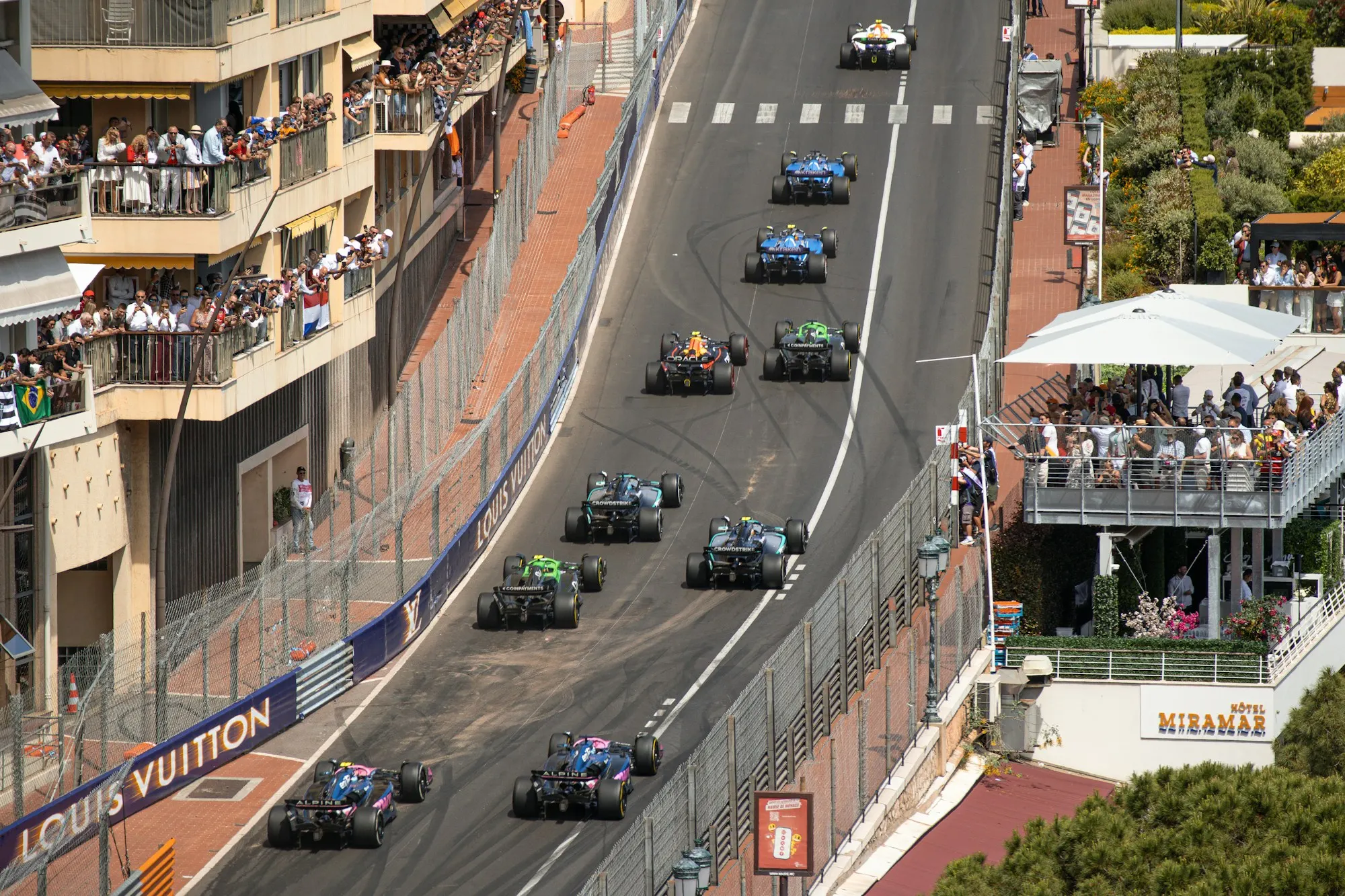
Formula 1 sponsorship gives brands access to one of the fastest-growing audiences in sport: F1 counted 827 million fans in 2025, a cumulative TV audience of 1.83 billion according to Nielsen Sports, and 6.75 million race-weekend attendees. Brands can buy in at several levels, from global championship partnerships and team title deals to race title rights, trackside boards, broadcast features, digital content and Paddock Club hospitality, and F1's own sponsorship revenue reached about US$840 million in 2025 according to Liberty Media. The same toolkit applies to other major events such as the FIFA World Cup, tennis Grand Slams, golf tours and the Dakar Rally.
Key takeaways
- Audience: F1 reported 827 million fans in 2025, up 12% year on year, with 43% under 35 and 42% female (Formula 1, 2025).
- Money: Formula 1's revenue reached US$3.87 billion in 2025, of which sponsorship was about US$840 million, up from about US$635 million in 2024 (Liberty Media, 2026).
- Three buying points: the championship (Formula One Management), the 11 teams on the 2026 grid, and each race promoter sell separate rights.
- Middle East: Bahrain, Saudi Arabia, Qatar and Abu Dhabi hold long-term race contracts, although the 2026 Bahrain and Saudi races were cancelled because of the regional conflict.
- Not only for giants: smaller companies can use hospitality, race-level partnerships, supplier deals and content rather than headline sponsorship.
- Measure what matters: link each sponsorship to one main goal (awareness, B2B sales, recruitment or market entry) and track it from day one.
How big is the Formula 1 audience in 2026?
According to Formula 1's 2025 season review, the sport's global fanbase reached 827 million, up 12% on 2024 and 63% since 2018. Under-35s made up 43% of fans and women 42%, two groups that many sponsors find hard to reach through traditional motorsport. Attendance across the 24 races of 2025 was 6.75 million, up 4%, with 19 sold-out events.
On television, the 2025 season drew a cumulative audience of 1.83 billion, up 6.8% on 2024, and an average of 76.1 million viewers per Grand Prix, the highest since 2020, according to a Nielsen Sports report published in March 2026. The 2025 film F1 earned more than US$630 million at the box office, and from 2026 Apple TV is F1's exclusive broadcaster in the United States under a five-year deal, according to Formula 1.
How does Formula 1 sponsorship work?
F1 rights are sold by three different owners, and a brand can work with one or all of them.
1. Championship partnerships (Formula One Management)
Formula One Management, owned by Liberty Media, sells sport-wide rights in tiers. In 2026 the top tier of Global Partners includes Aramco, AWS, DHL, Heineken, Lenovo, LVMH, MSC Cruises, Pirelli, Qatar Airways and Salesforce, followed by Official Partners, Official Providers (suppliers), Regional Partners and betting partners. Global packages typically combine trackside branding at most races, broadcast integration, digital rights and, often, race title sponsorship.
2. Team sponsorship
Each team, including newcomer Cadillac in 2026, sells its own inventory: the team name (title partner), car livery, driver suits and helmets, garage and motorhome branding, and B2B programmes. Examples include Oracle's title partnership with Red Bull Racing from 2022 and HP's title partnership with Scuderia Ferrari, announced in April 2024. Below title level sit principal, official and supplier partners, with prices that fall sharply as visibility decreases.
3. Race-level rights
Each Grand Prix promoter controls local rights such as race title sponsorship, fan-zone activations, grandstand naming and local hospitality. Aramco took title rights to the 2020 United States, Spanish and Hungarian Grands Prix as part of its global deal, and Qatar Airways was title sponsor of three Grands Prix in 2023, including the Qatar Grand Prix.
Other assets
- Trackside and broadcast: circuit boards, digital overlays and on-screen features such as timing and data graphics.
- Digital and social: sponsored content on F1, team and driver channels, which suit younger fans.
- Hospitality: the F1 Paddock Club offers prime views of the action, a pit-lane walk, paddock access and appearances by drivers or team executives, according to F1 Experiences.
- Licensing: official merchandise, games and collaborations, part of the "other" revenue line with hospitality and freight.
Which brands are F1's notable partners?
LVMH signed a 10-year global partnership announced in October 2024 and starting in the 2025 season, bringing Louis Vuitton, Moët Hennessy and TAG Heuer to the sport; its value has not been disclosed. Aramco became a Global Partner in March 2020 under a long-term deal that also covers work on sustainable fuels. Qatar Airways became Global Partner and Official Airline in 2023 under a five-year agreement running through the 2027 season. In its 2025 results, Liberty Media named Disney, Lego, Pepsi, Apple and Standard Chartered as marquee partners, with Standard Chartered signing a new multi-year deal.
The commercial trend is strong. According to Liberty Media's 2025 results, Formula 1 revenue rose 14% to US$3.87 billion, and sponsorship accounted for 21.7% of it, about US$840 million, compared with about US$635 million in 2024.
Why do Middle East races matter for sponsors?
The Gulf has become one of F1's most important regions, both as a host and as a source of sponsors.
| Grand Prix | Circuit | First race | Contract runs to |
|---|---|---|---|
| Bahrain | Bahrain International Circuit, Sakhir | 2004 | 2036 |
| Saudi Arabia | Jeddah Corniche Circuit | 2021 | 2030 |
| Qatar | Lusail International Circuit | 2021 | 2032 |
| Abu Dhabi | Yas Marina Circuit | 2009 | 2030 |
Contract dates are as reported by Sky Sports in June 2026. These events give regional companies a platform to host clients and government partners, and give international brands access to Gulf decision-makers. Abu Dhabi traditionally closes the season, and in 2026 Qatar is scheduled for 27–29 November and Abu Dhabi for 4–6 December.
The region also shows why risk planning matters. On 14 March 2026 Formula 1 cancelled the Bahrain and Saudi Arabian Grands Prix, scheduled for April, because of the conflict in the Middle East, and did not replace them, leaving a 22-race calendar, according to Sky Sports. Sponsors with race-specific deals should check cancellation, refund and make-good clauses before signing.
What other sporting events offer similar opportunities?
- FIFA World Cup: FIFA said about 5 billion people engaged with the 2022 tournament in Qatar and the final reached close to 1.5 billion viewers (FIFA, January 2023). The 2026 final, in which Spain beat Argentina, drew more than 62.8 million US viewers, a record for the country according to Axios (July 2026).
- UEFA Champions League: UEFA sells a small number of centralised sponsorships for Europe's top club competition, attractive to brands seeking weekly exposure from autumn to spring.
- Tennis Grand Slams: long partnerships are common; Rolex, for example, has been the Official Timepiece of Wimbledon since 1978, according to Rolex.
- Golf: Dubai-based DP World became title partner of the European Tour, renamed the DP World Tour from 2022, extending a relationship that began in 2009 with the Race to Dubai finale (DP World, 2021).
- Dakar Rally: the 2026 edition ran from 3 to 17 January in Saudi Arabia, the seventh time the country has hosted it, starting and finishing in Yanbu.
Sponsorship types compared: which fits your goal?
| Sponsorship type | Best for | Typical budget scale | Key measures |
|---|---|---|---|
| Championship global partner | Global awareness, category leadership | Very high, multi-year | Brand awareness, reach, sales lift |
| Team title partner | Brand identity, technology showcase | Very high | Media value, brand recall, B2B deals |
| Team official partner or supplier | Product credibility, B2B access | Medium to high | Leads, contracts, case studies |
| Race title or trackside | Regional market entry, local awareness | Medium | Local reach, footfall, sales in host market |
| Hospitality (Paddock Club, suites) | Client entertainment, deal closing | Low to medium per guest | Meetings held, pipeline value, renewals |
| Digital and content | Younger audiences, engagement | Low to medium | Views, engagement, followers, traffic |
| Licensing and co-branded products | Revenue, retail presence | Varies | Units sold, royalties, new stockists |
How can brands of different sizes use sports sponsorship?
Large companies can consider global or team title partnerships, which need multi-year budgets and a team to run activation in many markets.
Mid-sized companies often get better value from official supplier status with a team, race-level rights in a target market, or regional partnerships. A supplier deal that proves your product works under F1 conditions can be stronger sales material than a logo on the car.
Small companies and new market entrants can start with hospitality: hosting key clients at a Grand Prix in Qatar or Abu Dhabi can open doors in the Gulf. Content partnerships with creators, fan-zone activations and support for junior series are lower-cost alternatives.
Measuring return on investment
- Set one primary goal per deal and agree the baseline before the season starts.
- Separate media exposure from business outcomes; media value estimates do not equal sales.
- Track hospitality guests through your CRM and record the deals that follow.
- Budget for activation, not only for rights: a sponsorship nobody uses rarely pays back.
- Review exclusivity, cancellation and local advertising rules for each country.
How Yazdan Invest can help
Yazdan Invest is an international investment group based in Muscat, Oman, with a network of more than 290 traders, especially in Saudi Arabia and the Arab region. For brands planning to enter Gulf markets around major events, our Business Accelerator supports business launches and market entry, and our international trade network connects products with regional buyers. To discuss your plans, please contact us.
This article is general information only and is not investment, legal or marketing advice.
Frequently asked questions
How much does Formula 1 sponsorship cost?
Prices are rarely published and vary widely, from hospitality packages for a few guests to multi-year global and team title deals. Formula 1 earned about US$840 million from sponsorship in 2025, according to Liberty Media, which shows the scale at the top end.
What is the difference between an F1 global partner and a team sponsor?
A global partner buys rights from Formula One Management across the whole championship, such as trackside boards and broadcast integration. A team sponsor buys rights from a single team, such as space on the car, driver kit and team hospitality.
How many people watch Formula 1?
According to Nielsen Sports, the 2025 season had a cumulative TV audience of 1.83 billion and an average of 76.1 million viewers per race. Formula 1 reports a global fanbase of 827 million for 2025.
Are the Middle East races still on the 2026 F1 calendar?
The Qatar and Abu Dhabi Grands Prix remain on the 2026 calendar for late November and early December. The Bahrain and Saudi Arabian Grands Prix were cancelled in March 2026 because of the regional conflict, although both circuits hold contracts until 2036 and 2030 respectively.
Can a small business benefit from F1 sponsorship?
Yes, usually through hospitality, supplier deals, local race activations or digital content rather than headline sponsorship. The key is to set a clear business goal and measure leads and deals rather than logo exposure alone.
Sources
- Formula 1's record-breaking 2025 season in numbers — Formula 1
- Liberty Media reports fourth quarter and year end 2025 results — Liberty Media
- How Formula 1 made a record $3.87 billion in 2025 — PlanetF1
- Formula 1's 2025 audience was the largest in five years — GRANDPRIX247/Reuters
- Formula 1 and LVMH announce historic 10-year Global Partnership — Formula 1
- Formula 1 announces long-term global partnership with Aramco — Formula 1
- Qatar Airways Formula 1 partnership — Qatar Airways
- Formula 1 sponsors and partners — RTR Sports
- Ferrari and HP announce a title partnership — Ferrari
- Oracle becomes Red Bull title sponsor — RACER
- Paddock Club — F1 Experiences
- F1 confirms cancellation of Bahrain and Saudi Arabian Grands Prix — Sky Sports
- F1 track contracts: how long each circuit has a deal — Sky Sports
- Formula 1 to race in Bahrain until 2036 — Formula 1
- One month on: 5 billion engaged with the FIFA World Cup Qatar 2022 — FIFA
- World Cup final draws record 62.8M U.S. viewers — Axios
- Rolex and Wimbledon — Rolex
- European Tour to become the DP World Tour from 2022 — DP World
- 2026 Dakar Rally — Wikipedia
- Everything you need to know about Cadillac's 2026 entry into F1 — Formula 1