Investment Opportunities in Oman 2026: Sectors, Rules, Incentives
Investment opportunities in Oman in 2026: Vision 2040 priority sectors, 100% foreign ownership, 15% corporate tax, investor residency and the latest data.
Investment opportunities in Oman in 2026 are concentrated in the sectors that Oman Vision 2040 and the new Eleventh Five-Year Plan (2026–2030) single out for growth: the digital economy, manufacturing, tourism, logistics, mining, fisheries and renewable energy, including green hydrogen. Since 2020, foreign investors can own 100% of a company in most activities under the Foreign Capital Investment Law, and Oman pairs a 15% corporate tax rate with long tax holidays in its free and special economic zones.
Key takeaways
- Oman's economy grew 2.3% in 2025 and reached about OMR 42.1 billion at current prices (NCSI, released March 2026).
- The stock of foreign direct investment reached OMR 32.2 billion at the end of Q1 2026, up 8.7% year on year (NCSI, 2026).
- The Eleventh Five-Year Plan (2026–2030) targets average growth of about 4% and names the digital economy, manufacturing and tourism as core sectors (Ministry of Finance, January 2026).
- Royal Decree 50/2019 allows 100% foreign ownership, except for activities on a negative list that had 123 entries after a 2024 update (MOCIIP, 2024).
- Since 31 August 2025, investors can apply for 10-year or 5-year residence through the Invest Oman platform. The thresholds are OMR 500,000 and OMR 250,000.
- Corporate tax is 15%. A 5% personal income tax will apply only to annual income above OMR 42,000 from 1 January 2028 (Royal Decree 56/2025).
What is the state of Oman's economy in 2026?
Oman enters 2026 on a stable footing. According to the National Centre for Statistics and Information (NCSI), real GDP grew 2.3% in 2025, and GDP at current prices reached about OMR 42.14 billion (around USD 110 billion). In Q4 2025, non-oil activities grew 4.8% year on year.
The International Monetary Fund's 2025 Article IV review, published in January 2026, describes a resilient economy with low inflation and sound public finances. The IMF reports average inflation of 0.6% in 2024 and 0.9% in January–October 2025. It puts the 2025 fiscal surplus at 0.7% of GDP and government debt at 36.1% of GDP in September 2025, a big drop from the levels of the early 2020s. The Fund also notes that non-hydrocarbon GDP grew 3.5% in the first half of 2025.
NCSI data show that the FDI stock rose 8.1% to OMR 31.38 billion at the end of 2025. Oil and gas held about OMR 25.4 billion of it and manufacturing about OMR 2.67 billion. The United Kingdom and the United States are the largest source countries.
| Indicator | Latest value | Period | Source |
|---|---|---|---|
| Real GDP growth | 2.3% | 2025 | NCSI |
| GDP at current prices | OMR 42.14 bn | 2025 | NCSI |
| Inflation | 0.9% | Jan–Oct 2025 | IMF |
| Government debt | 36.1% of GDP | Sept 2025 | IMF |
| FDI stock | OMR 32.2 bn | End Q1 2026 | NCSI |
| Committed investment in economic, free and industrial zones | OMR 22.4 bn | End 2025 | OPAZ |
Which sectors does Oman Vision 2040 prioritise?
Oman Vision 2040 is the national plan to move the economy away from oil, and its delivery is tracked by a follow-up unit set up by Royal Decree 100/2020. The Eleventh Five-Year Plan (2026–2030), launched on 2 January 2026, is its second roadmap. The plan targets roughly 4% average growth at constant prices and FDI inflows equal to 11% of GDP. It groups sectors into "core" and "supporting" categories, each with an average growth target.
| Sector | Plan role | Target average growth 2026–2030 |
|---|---|---|
| Digital economy | Core | 10.8% |
| Manufacturing | Core | 5.9% |
| Tourism | Core | 5.7% |
| Transport and logistics | Supporting | 7.0% |
| Mining | Supporting | 6.2% |
| Fisheries | Supporting | 5.0% |
| Agriculture and forestry | Supporting | 4.2% |
Source: Ministry of Finance announcement of the Eleventh Five-Year Development Plan, January 2026. The plan also lists renewable energy as a supporting sector but gives no growth figure for it.
Logistics and ports
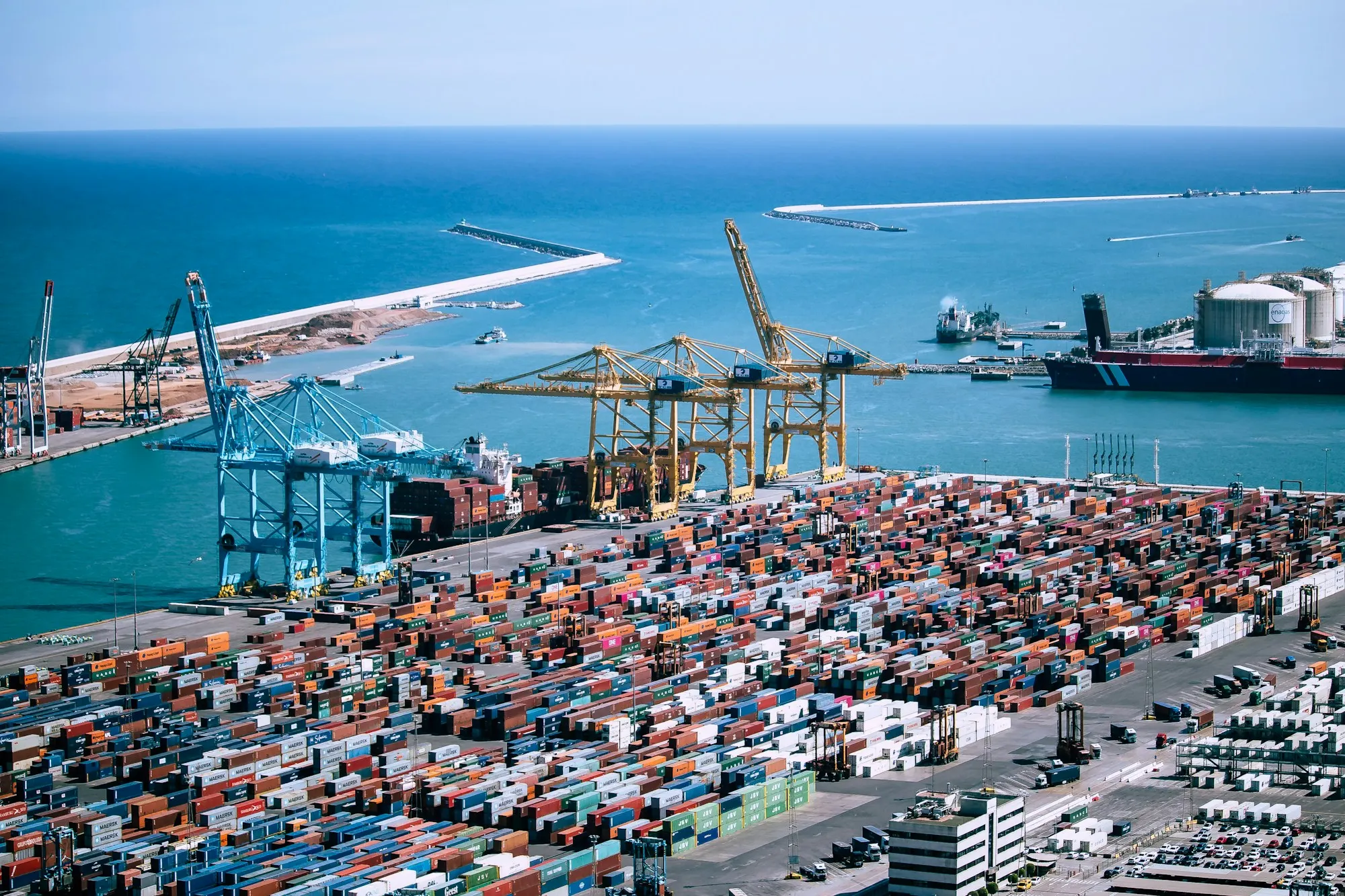
Oman sits outside the Strait of Hormuz and faces the Arabian Sea, so its ports reach Gulf, Indian Ocean and East African markets. The three anchor ports are Sohar in the north, Duqm in the centre and Salalah in the south, and each has a free or special economic zone next to it. Opportunities include warehousing, cold chains, re-export trading and services for the large industrial projects that cluster around the ports.
Manufacturing
Manufacturing is a core sector in the new plan. Investment is concentrated in the zones: OPAZ reports that industry took about 97% of the roughly OMR 1.4 billion of new investment committed across its zones in 2025. Current projects include metals, petrochemicals, food processing, solar components and wind turbines. Deloitte's 2026 tax summary also notes a five-year, non-renewable tax exemption for manufacturing.
Mining
According to the Ministry of Energy and Minerals, six new concession agreements were signed in 2025 for copper, chromium and salt. By the end of that year, 13 companies were working across 27 concession areas. Mineral sales reached about OMR 159 million in 2025, up 30%. The ministry plans to offer three to four new concession areas a year, each over 1,000 km², with terms of 20 to 30 years.
Tourism
The NCSI tourism bulletin for 2025 counts about 4 million visitors and inbound tourism spending above OMR 1 billion. It also reports hotel revenue of OMR 359 million and roughly 1,475 hotels at the end of 2025. Development land is available in integrated tourism complexes and in Duqm's planned coastal tourism zone.
Renewable energy and green hydrogen
Hydrom, the state entity created in 2022, allocates land for green hydrogen projects through competitive rounds. Round 1 (2023) awarded blocks in Duqm and Round 2 (2024) awarded blocks in Dhofar. Oman targets at least 1 million tonnes of green hydrogen a year by 2030, 3.75 million tonnes by 2040 and 8.5 million tonnes by 2050. Smaller investors usually find openings in the supply chain.
Fisheries and food security
Preliminary NCSI data show fish landings of 798,615 tonnes in 2025, worth about OMR 576 million, a value rise of 12.7% on 2024. Aquaculture, cold storage, processing and export packaging are all being promoted.
ICT and the digital economy
The digital economy has the highest growth target in the new plan, at 10.8% a year. Knowledge Oasis Muscat, a technology park near Muscat International Airport, houses international technology companies and a start-up incubator. Areas to watch include cloud, cybersecurity, fintech and AI.
Can foreigners own 100% of a company in Oman?
Yes, in most activities. The Foreign Capital Investment Law (Royal Decree 50/2019) took effect on 1 January 2020. It removed the old requirement for an Omani partner and the minimum capital rule for foreign investors. Investors may repatriate profits and capital and may transfer their shares in line with the law.
Some activities are closed to foreigners. These are listed on a negative list issued under Ministerial Decision 209/2020. The Ministry of Commerce, Industry and Investment Promotion (MOCIIP) added 28 activities in 2024, bringing the total to 123. Examples include grocery stores, used-car sales, several handicrafts and mobile cafés. More than 2,000 commercial and industrial activities remain open. In 2024, Ministerial Decision 435/2024 also suspended foreign investment licences for expatriates working in limited-skill professions. Investors who are already residents should check their eligibility before applying.
In most activities a foreign investor can now own 100% of an Omani company. Check every proposed activity against the current negative list before you incorporate.
What tax incentives does Oman offer investors?
Oman's tax system is simple by international standards. According to PwC's worldwide tax summaries (reviewed July 2026) and Deloitte's 2026 highlights:
- Corporate income tax is 15%. A 3% rate applies to qualifying small Omani companies with registered capital up to OMR 60,000, gross income up to OMR 150,000 and no more than 25 employees.
- Withholding tax on dividends and interest paid abroad has been suspended since January 2023. Royalties and some service fees still carry 10%.
- VAT is 5%, and exports are zero-rated.
- Free and special economic zones offer tax holidays of up to 30 years, customs exemptions and lower Omanisation ratios.
- Personal income tax of 5% will apply from 1 January 2028, only on annual income above OMR 42,000 (Royal Decree 56/2025).
- Large multinational groups with consolidated revenue of EUR 750 million or more pay a top-up tax that brings their effective rate to 15%. This applies from fiscal years starting on or after 1 January 2025 (Royal Decree 70/2024).
How does Oman's golden visa for investors work?
Oman relaunched its long-term residence programme on 31 August 2025, and applications go through the Invest Oman digital platform. According to a September 2025 legal briefing by Trowers & Hamlins, the main routes are:
| Route | Duration | Main requirement |
|---|---|---|
| Golden residence | 10 years | Invest at least OMR 500,000 in an Omani company, listed company or government bonds, or buy property of that value |
| Golden residence (employment route) | 10 years | Set up a company that employs at least 50 Omani nationals |
| Silver residence | 5 years | Invest or buy property of at least OMR 250,000 |
| Retirement residence | 5 years | Age 60+ with fixed income of at least OMR 4,000 a month |
Holders can sponsor their immediate family. Fees were reported at OMR 551 (10-year) and OMR 326 (5-year) at launch. Applicants should confirm the current fees and documents with the authorities.
How do you start investing in Oman?
- Choose a mainland company (direct access to the local market) or a free or special economic zone (tax and customs benefits).
- Check the activity against the negative list and any sector licences.
- Register through the Oman Business Platform (MOCIIP) or the relevant zone authority.
- Open a bank account, obtain approvals and plan for Omanisation.
- Apply for investor residency and staff visas.
To compare zone locations, see our separate guide to Oman's free zones and special economic zones.
How Yazdan Invest can help
Yazdan Invest is an investment group headquartered in Muscat. Its Oman Register department handles company formation and government services in Oman, and its Visa & Immigration team supports residency applications. Its Business Accelerator helps investors launch businesses and production lines, building on the group's own production lines in Oman. To discuss a project in Oman, contact our team or learn more about the Business Accelerator.
This article is general information and does not constitute investment, legal or tax advice.
Frequently asked questions
Is there a minimum capital requirement for foreign investors in Oman?
The Foreign Capital Investment Law of 2019 removed the general minimum capital requirement for foreign investors. Some regulated activities and some zones may still set their own capital or deposit rules, so check the requirements for your specific activity.
Does Oman have personal income tax?
Not yet. A 5% tax on individual annual income above OMR 42,000 takes effect on 1 January 2028 under Royal Decree 56/2025. Most residents earn below that threshold and will not be affected.
Which sectors are growing fastest in Oman?
The Eleventh Five-Year Plan (2026–2030) sets the highest growth target for the digital economy (10.8% a year), followed by transport and logistics (7%), mining (6.2%), manufacturing (5.9%) and tourism (5.7%). Actual results will depend on oil prices and project delivery.
How large is foreign direct investment in Oman?
According to NCSI, the FDI stock reached OMR 32.2 billion at the end of Q1 2026, up 8.7% year on year. Most of it is in oil and gas, and the UK and the US are the largest source countries.
Sources
- IMF Executive Board Concludes 2025 Article IV Consultation with the Sultanate of Oman (IMF, January 2026)
- Oman's economy expands 2.3% in 2025 on non-oil growth: NCSI (Arab News, March 2026)
- FDI grows 8.1% to RO31.3bn (Muscat Daily, citing NCSI, April 2026)
- Oman's FDI stock rises 8.7% to OMR32.2bn in Q1 2026 (Times of Oman, citing NCSI)
- Oman launches five-year Development Plan (Ministry of Finance, January 2026)
- Oman Vision 2040: a blueprint for sustainable growth (World Bank blog)
- FDI in Oman (Trowers & Hamlins, 2026)
- Oman limits 28 business activities to nationals (Oman Observer, September 2024)
- Oman suspends foreign investment licences for residents with limited skills (Gulf News, October 2024)
- Oman: taxes on corporate income (PwC Worldwide Tax Summaries)
- Oman tax highlights 2026 (Deloitte)
- Oman introduces Personal Income Tax (PwC Middle East, 2025)
- Oman issues Supplementary Tax Law for certain multinational enterprises (EY, January 2025)
- Oman's golden and silver visa programmes: what you need to know (Trowers & Hamlins, September 2025)
- Inbound tourism spending surpasses RO 1 bn in 2025 (Oman Observer, citing NCSI)
- Oman's fish landing value surges to OMR 576 million in 2025 (Times of Oman, citing NCSI)
- Oman mining offers investment opportunities (Oman Observer, June 2026)
- CMS expert guide to hydrogen: Oman
- Total committed investment in economic, free and industrial zones reached OMR 22.4 billion (OPAZ, February 2026)