Investing in Thailand 2026: BOI Incentives, Sectors and Rules
Thailand's BOI applications hit THB 1.71 trillion in Jan–Sep 2026, up 28%. Key sectors, top source countries, ownership rules and incentives for investors.
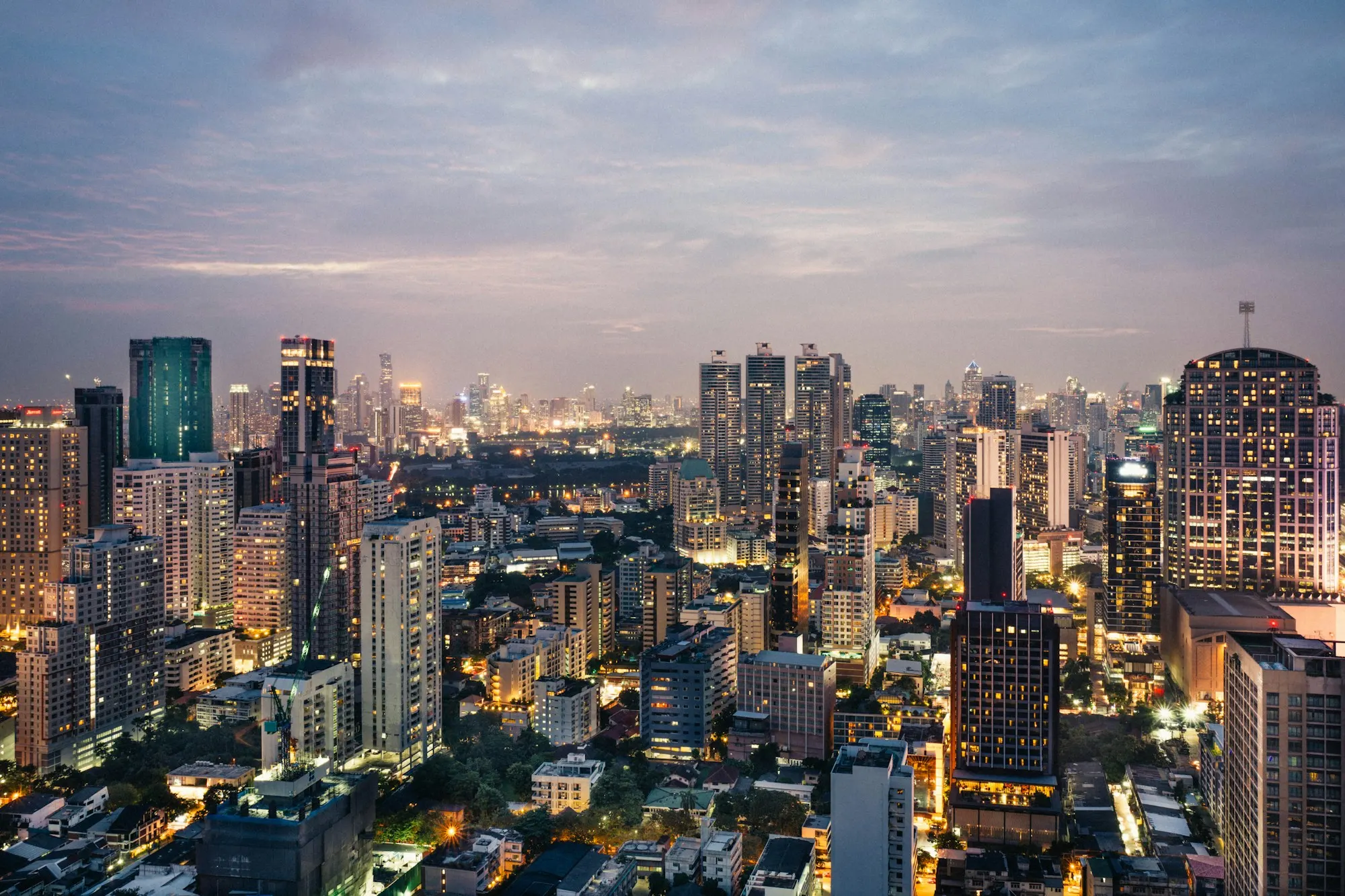
Thailand is one of Asia's fastest-growing investment destinations in 2026: applications for Board of Investment (BOI) promotion reached about THB 1.71 trillion in January–September 2026, up 28% year on year, according to the BOI. Most of that money is flowing into data centres, cloud, chips and electronics, and most of it is foreign. For investors from the Gulf and elsewhere, the practical question is less "whether" than "how": which route to ownership, which incentives, and which region.
Key takeaways
- BOI promotion applications hit 1,954 projects worth THB 1,707,430 million in the first nine months of 2026, a 28% rise (BOI, October 2026).
- Foreign direct investment applications grew even faster, up 62% to about THB 1.55 trillion, led by Singapore, China, the UK, Japan and Taiwan.
- The digital industry alone accounted for more than THB 1.17 trillion, roughly double the year before; electronics added THB 189 billion.
- Under the Foreign Business Act, foreigners are generally limited to 49% in restricted activities, but BOI-promoted projects can relax ownership, capital and work-permit rules.
- Thailand's standard corporate income tax rate is 20% (PwC, reviewed August 2026), while BOI promotion can bring multi-year tax exemptions.
- The Central and Eastern regions took 93% of applications by value, with the Eastern Economic Corridor at the heart of industrial investment.
How much foreign investment is Thailand attracting in 2026?
The headline numbers come from the BOI's nine-month statement, published on 26 October 2026 and reported by Xinhua, Kaohoon International and Money & Banking. Between January and September 2026, the BOI received 1,954 applications for investment promotion worth THB 1,707,430 million (about USD 50.6 billion, per Xinhua), 28% more than in the same period of 2025.
Foreign capital drove the jump. Applications involving foreign direct investment covered 1,309 projects worth THB 1,550,784 million, up 62%. The pipeline is also moving from paper to reality: the BOI approved 1,951 projects worth about THB 1.51 trillion in the same period and issued promotion certificates to 1,961 projects worth THB 1,047,710 million, up 10%. According to the BOI, approved projects are expected to create more than 116,000 jobs for Thai workers and generate exports of more than THB 1.96 trillion a year.
BOI Secretary-General Narit Therdsteerasukdi linked the surge to digital and AI investment, which is now the single largest driver of Thai inbound capital.
Which sectors are leading investment in Thailand?
Data infrastructure and electronics dominate. The BOI counted 111 applications along what it calls the AI supply chain, worth more than THB 1.2 trillion, covering data centres, cloud services, chip design, semiconductor testing, printed circuit boards, power systems, AI servers and hard-disk drives. Companies named in the BOI release include Analog Devices, Delta Electronics, Western Digital and Celestica.
| Sector (Jan–Sep 2026) | Projects | Value (THB million) | Note |
|---|---|---|---|
| Digital industry | 139 | over 1,170,000 | about double 2025 |
| Electronics & electrical appliances | 262 | 189,370 | up 7% |
| Agriculture & food | 218 | 80,190 | up 59% |
| Energy & infrastructure | 313 | 59,870 | most projects |
| Logistics & services | 236 | 51,820 | — |
| Automotive & parts | 191 | 36,340 | — |
| Minerals, metals & materials | 183 | 28,460 | — |
| Chemicals & petrochemicals | 178 | 22,160 | — |
| Machinery, automation & robotics | 122 | 18,880 | — |
Source: BOI figures as reported by Kaohoon International and Money & Banking, October 2026.
Two lines deserve attention beyond technology. Agriculture and food grew 59%, with applicants such as Nestlé and Thai Inaba Foods, which matters for Gulf food-security buyers and halal supply chains. And energy and infrastructure had the largest number of projects, mostly renewables, industrial estates and industrial water supply, showing that the base for manufacturing is still expanding.
Where does the money come from?
Singapore leads by a wide margin, largely because global data-centre and cloud groups often invest through Singapore holding companies. The top five sources of FDI applications in January–September 2026 were:
| Source of FDI | Projects | Value (THB million) |
|---|---|---|
| Singapore | 214 | 1,164,595 |
| China | 493 | 63,390 |
| United Kingdom | 15 | 48,311 |
| Japan | 192 | 45,478 |
| Taiwan | 70 | 43,243 |
Source: BOI, as reported by Kaohoon International, October 2026.
China submitted the most projects (493), reflecting the relocation of manufacturing and supply chains into Southeast Asia. For companies already sourcing from China, Thailand is increasingly the "plus one" location where Chinese suppliers set up new lines.
Which regions of Thailand attract the most investment?
According to the BOI's regional breakdown, the Central region attracted THB 955,260 million from 778 projects and the Eastern region THB 632,320 million from 856 projects; together they account for 93% of the total. The Eastern region includes the Eastern Economic Corridor (Chachoengsao, Chonburi and Rayong), home to the main industrial estates and the Laem Chabang deep-sea port.
Other regions are smaller but growing. The South attracted THB 34,140 million (up 40%), followed by the Northeast (THB 23,930 million), the North (THB 12,680 million) and the West (THB 8,960 million). For tourism, agro-processing or food projects, these secondary regions can offer lower land and labour costs.
Can foreigners own a company in Thailand?
Yes, but the route matters. The Foreign Business Act generally limits foreign ownership to 49% in restricted business activities, with Thai shareholders holding at least 51% (Forvis Mazars, 2026). Activities on the restricted lists need a Foreign Business License if a foreign investor wants majority control.
There are four common routes:
| Route | Foreign ownership | Typical requirement |
|---|---|---|
| Thai company, non-restricted activity | Majority possible | Registered capital of about THB 2 million |
| Foreign Business License | Majority, case by case | At least THB 3 million per restricted activity |
| BOI-promoted company | Often 100% in promoted activities | Must meet BOI conditions for the activity |
| US Treaty of Amity | Majority for qualifying US investors | Foreign Business Certificate from DBD |
Sources: ASEAN Briefing (May 2026); Forvis Mazars (2026).
ASEAN Briefing (2026) also notes that non-BOI companies are commonly expected to hold about THB 2 million of paid-up capital and employ four Thai staff for each foreign work permit. BOI promotion relaxes these ratios, which is one reason so many foreign investors apply. In 2026 the Department of Business Development also tightened shareholder verification, so nominee structures carry more risk than before.
What incentives does the BOI offer?
BOI incentives depend on the activity and location, but the main categories are corporate income tax exemptions, import-duty relief on machinery and raw materials, permission for foreign ownership and land ownership for the project, and easier visas and work permits. Advisers describe tax holidays ranging from three years to longer periods for top-priority activities: Forvis Mazars (2026) cites up to 13 years, and ASEAN Briefing (2026) cites three to 15 years depending on the scheme.
Without incentives, Thailand's standard corporate income tax rate is 20% (PwC Worldwide Tax Summaries, reviewed August 2026). Small companies with paid-in capital of up to THB 5 million and revenue up to THB 30 million pay reduced rates on the first THB 3 million of profit. Large multinational groups with consolidated revenue above EUR 750 million are also subject to a 15% top-up tax under Pillar Two from 2025. VAT registration is generally required once annual revenue exceeds THB 1.8 million.
BOI promotion is the main lever for foreign investors: it can unlock full ownership, tax holidays and easier work permits in a single package.
What about long-term residency for investors?
Thailand's Long-Term Resident (LTR) visa, administered with the BOI, is valid for 10 years. The Royal Thai Embassy in Bern lists five categories: wealthy global citizens with at least USD 1 million in assets, wealthy pensioners over 50, work-from-Thailand professionals, highly skilled professionals in targeted industries, and dependants. According to Erickson Immigration Group (January 2025), reforms approved by the Cabinet removed the minimum annual income rule for wealthy global citizens, dropped the five-year work-experience rule for two categories and lowered the employer revenue threshold for remote workers. Applicants should check the current BOI criteria before applying.
Is Thailand a good fit for Gulf investors?
Thailand suits investors who want a manufacturing or data base in Southeast Asia, access to ASEAN markets, and a strong food-processing sector. The main things to weigh are the ownership rules, the need for genuine Thai shareholders outside promoted activities, and the competition for land and power in the Eastern corridor. Tourism, hospitality and food remain open areas for mid-sized investors, while the largest BOI incentives currently go to digital, electronics and advanced manufacturing.
This article is general information and not investment, legal or tax advice.
How Yazdan Invest can help
Yazdan Invest is studying research and investment projects in Thailand as part of its international portfolio; you can read about it on our Thailand research project page. With representatives in Dubai and sourcing agents in China, and a trading network of more than 290 traders in Saudi Arabia and the Arab region, we can help Gulf businesses compare Thailand with other locations and connect with partners. To discuss a project, contact us or call +968 7733 3556.
Frequently asked questions
How much did Thailand's BOI receive in investment applications in 2026?
In January–September 2026 the BOI received 1,954 applications worth about THB 1.71 trillion, up 28% year on year. Foreign direct investment applications rose 62% to about THB 1.55 trillion.
Can a foreigner own 100% of a company in Thailand?
In restricted activities, foreign ownership is generally limited to 49% unless a Foreign Business License is granted. BOI-promoted projects can often be fully foreign-owned, and qualifying US investors can use the Treaty of Amity.
What is the minimum capital for a foreign company in Thailand?
Advisers commonly cite THB 2 million of registered capital for foreign-owned companies and at least THB 3 million per activity that needs a Foreign Business License (ASEAN Briefing, 2026). Work permits usually require extra capital and Thai staff.
What is the corporate tax rate in Thailand?
The standard corporate income tax rate is 20%, with lower rates for small companies. BOI-promoted projects may receive corporate income tax exemptions for several years.
Which sectors are growing fastest in Thailand?
Digital infrastructure, including data centres and cloud, leads by value, followed by electronics. Agriculture and food applications grew 59% in the first nine months of 2026.
Sources
- Thailand's BOI Investment Applications Hit THB1.7 Trillion in 9M26 — Kaohoon International
- BOI investment promotion applications for the first nine months surged to 1.7 trillion baht — Money & Banking
- Thailand's investment pledges jump 28 pct in first 9 months — Xinhua
- Thailand's investment pledges jump 28% in first nine months — The Star
- Thailand Minimum Capital Requirements for Foreign Investors — ASEAN Briefing
- Foreign business ownership in Thailand explained — Forvis Mazars
- Thailand: Taxes on corporate income — PwC Worldwide Tax Summaries
- Long-Term Resident Visa (LTR) — Royal Thai Embassy, Bern
- Thailand to Update Rules for Long-Term Resident Visa — Erickson Immigration Group