Investment Opportunities in Europe 2026: Sectors and Countries
Investment opportunities in Europe 2026: EU growth forecasts, energy, defence, AI, tourism and logistics, a country-by-country snapshot and golden visa changes.

Investment opportunities in Europe in 2026 are concentrated in policy-backed sectors (clean energy and grids, defence, digital infrastructure and AI) and in faster-growing economies such as Spain, Poland, Portugal and Greece. Growth is modest overall: the European Commission's Spring 2026 forecast puts EU GDP growth at 1.1% in 2026 after an energy price shock linked to the Middle East conflict. Large public programmes still give investors a steady pipeline of projects.
Key takeaways
- The European Commission (May 2026) forecasts EU growth of 1.1% in 2026 and 1.4% in 2027. The euro area is forecast at 0.9% and 1.2%.
- Spain (2.4%) and Poland (3.5%) lead the larger economies in 2026, while Germany (0.6%) and Italy (0.5%) lag, according to the same forecast.
- Energy security, defence and digital sovereignty now drive EU spending: REPowerEU, the €150 billion SAFE defence loans, the Chips Act and Germany's €500 billion infrastructure fund.
- The Recovery and Resilience Facility had paid out €450 billion by October 2026 and closes at the end of 2026, so the focus is shifting to national and private funding.
- Residency-by-investment has narrowed: Spain ended its golden visa on 3 April 2025, and Portugal removed real estate in 2023 and lengthened its citizenship timeline in 2026.
What is Europe's economic outlook for 2026?
The Commission's Spring 2026 Economic Forecast, published on 21 May 2026, cut EU growth for 2026 to 1.1% from 1.5% in 2025. Euro area growth is forecast at 0.9% in 2026 and 1.2% in 2027. The cause was a jump in oil and gas prices after conflict broke out in the Middle East in March 2026. The Commission expects EU inflation to rise to 3.1% in 2026 before easing to 2.4% in 2027.
Recent data shows the picture is mixed rather than recessionary. Eurostat estimated euro area GDP growth of 0.6% in the second quarter of 2026 compared with the previous quarter. Annual inflation in the euro area rose to 3.8% in September 2026, with energy the main driver (Eurostat, 16 October 2026). For investors, this means higher financing costs for longer, but also stronger political support for energy independence.
Country snapshot: where is growth strongest?
| Country | GDP growth 2026 (f) | GDP growth 2027 (f) | Inflation 2026 (f) | Unemployment 2026 (f) | Main investment themes |
|---|---|---|---|---|---|
| Poland | 3.5% | 2.8% | 3.6% | 3.1% | Manufacturing, logistics, energy transition |
| Spain | 2.4% | 1.9% | 3.0% | 9.9% | Tourism, renewables, real estate, EU-funded projects |
| Greece | 1.8% | 1.6% | 3.7% | 8.3% | Tourism, real estate, energy |
| Portugal | 1.7% | 1.8% | 3.0% | 5.9% | Tourism, renewables, technology services |
| Netherlands | 1.0% | 1.1% | 3.2% | 4.2% | Port logistics, agri-food, technology |
| France | 0.8% | 1.1% | 2.4% | 8.3% | Nuclear and energy, aerospace, luxury and design |
| Germany | 0.6% | 0.9% | 2.9% | 4.0% | Infrastructure, defence, industrial technology |
| Italy | 0.5% | 0.6% | 3.2% | 5.7% | Manufacturing, luxury, gold and jewellery |
Source: European Commission, Spring 2026 Economic Forecast (21 May 2026). (f) = forecast.
Spain stands out among large economies. The Commission expects its unemployment rate to fall below 10% in 2026 for the first time since 2008. Germany's growth is weak in the short term, but a sharp rise in public investment and defence spending should support activity, and the Commission projects its deficit to widen to 3.7% of GDP in 2026.
Green transition and energy: still Europe's largest investment theme
The European Green Deal and the European Climate Law commit the EU to cutting net greenhouse gas emissions by at least 55% by 2030 compared with 1990, and to climate neutrality by 2050. In March 2023 EU negotiators agreed to raise the binding renewable energy target to at least 42.5% of energy use by 2030, with an aim of 45% (European Commission).
REPowerEU, launched in May 2022 after Russia's invasion of Ukraine, set out roughly €300 billion of measures to cut dependence on Russian fossil fuels and speed up renewables. The 2026 energy shock has strengthened the case for local generation, grids, storage and energy efficiency.
Opportunities include:
- Solar and wind projects, especially in Spain, Portugal and Greece, which have strong sunshine and wind resources
- Grid upgrades and battery storage. Grid congestion is now a real bottleneck: the Commission cites it as a brake on private investment in the Netherlands
- Green hydrogen, heat pumps and building renovation
- Supply chains for these sectors, from components to installation services
Digital, AI and semiconductors
EU AI Act. The AI Act entered into force on 1 August 2024. Bans on prohibited practices applied from 2 February 2025 and rules for general-purpose AI models from 2 August 2025. In 2026 EU lawmakers adopted a "Digital Omnibus" package that pushes the high-risk system obligations back to 2 December 2027 for stand-alone systems and 2 August 2028 for AI built into regulated products. Investors in AI products get a longer runway but must still plan for compliance.
European Chips Act. In force since 21 September 2023, it aims to mobilise more than €43 billion of public investment. The goal is to double the EU's share of global semiconductor production to 20% by 2030 (European Commission). Data centres, cloud services, cybersecurity and AI applications for industry also benefit from the EU's push for digital sovereignty.
NextGenerationEU and public investment programmes
NextGenerationEU's Recovery and Resilience Facility (RRF) funded reforms and investments across member states with grants and loans. According to the Commission's fifth annual report (7 October 2026), €450 billion had been disbursed and 32 final payment requests worth €123 billion were under assessment. All payments must be completed by 31 December 2026. Spain and Portugal used RRF money heavily, and the Commission expects Portugal's investment to dip in 2027 as these funds taper off.
After 2026, the gap will be partly filled by EU structural funds and national programmes. The biggest is Germany's special fund for infrastructure. In March 2025 the Bundestag and Bundesrat approved €500 billion over 12 years, including €100 billion for the climate and transformation fund and €100 billion for the federal states. Construction, rail, energy networks and digital infrastructure are the main beneficiaries.
Defence and industrial policy
European defence spending is rising fast. The ReArm Europe / Readiness 2030 plan aims to mobilise more than €800 billion. Its first pillar, the SAFE regulation, was adopted by the Council on 27 May 2025 and provides up to €150 billion in long-term loans for joint procurement of ammunition, air defence, drones and cyber capabilities. At the NATO summit in The Hague in June 2025, allies agreed to spend 5% of GDP on defence and security by 2035: at least 3.5% on core defence and 1.5% on related investment. Germany also exempted defence spending above 1% of GDP from its debt brake in March 2025.
This creates demand well beyond weapons makers: in steel, electronics, logistics, dual-use technology, cybersecurity and specialist services.
Real estate and tourism: Spain, Portugal and Greece
Tourism remains a core strength of southern Europe. Spain received a record 96.8 million international tourists in 2025, up 3.2% from 2024, who spent €134.7 billion (INE, Frontur and Egatur, February 2026). Hotels, holiday rentals, hospitality services and tourism-linked real estate continue to attract investors. The Commission notes that high energy and jet fuel costs are a downside risk for 2026, especially for long-haul arrivals.
The rules for property-linked residency have changed significantly:
| Country | Status of residency-by-investment (October 2026) |
|---|---|
| Spain | Golden visa abolished by Organic Law 1/2025, effective 3 April 2025 |
| Portugal | Real estate route removed in October 2023. Fund (€500,000), job creation and cultural or research routes remain. Organic Law 1/2026 (in force 19 May 2026) raised the residence period for most non-EU citizenship applicants to 10 years |
| Greece | Golden visa remains: €800,000 in Attica, Thessaloniki, Mykonos, Santorini and larger islands; €400,000 elsewhere; €250,000 for conversions to residential use or restored listed buildings. Golden visa properties cannot be used for short-term rentals |
Investors should therefore treat European property as an investment on its own merits, and not as a route to residency.
Logistics hubs and manufacturing
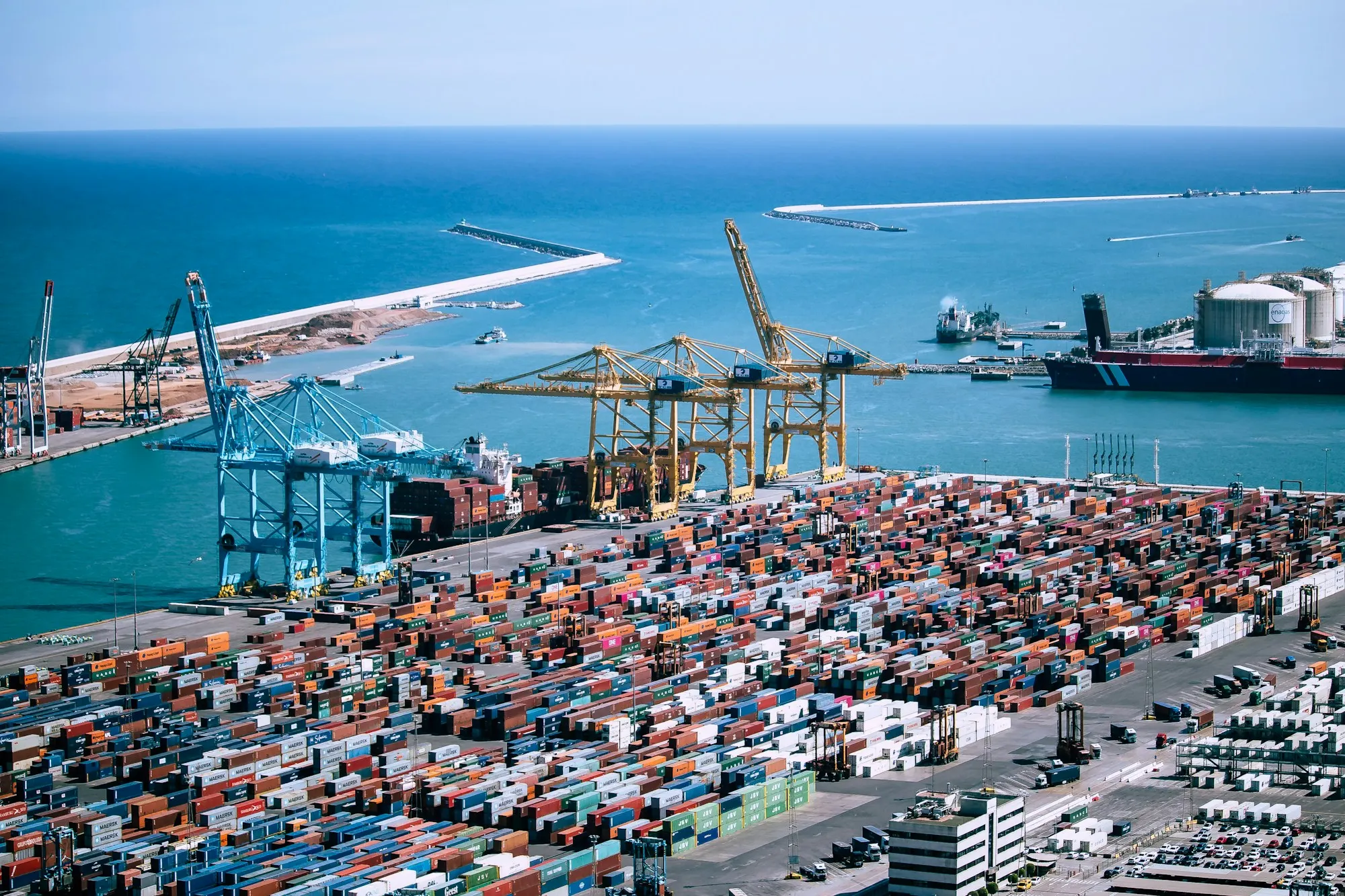
The Netherlands is Europe's gateway for trade. The Port of Rotterdam handled 428.4 million tonnes of cargo in 2025, down 1.7%, while container volumes rose 3.1% to 14.2 million TEU (Port of Rotterdam, 2025). Warehousing, cold-chain logistics, re-export and distribution to the rest of the EU remain strong opportunities, especially for companies trading between Asia, the Gulf and Europe.
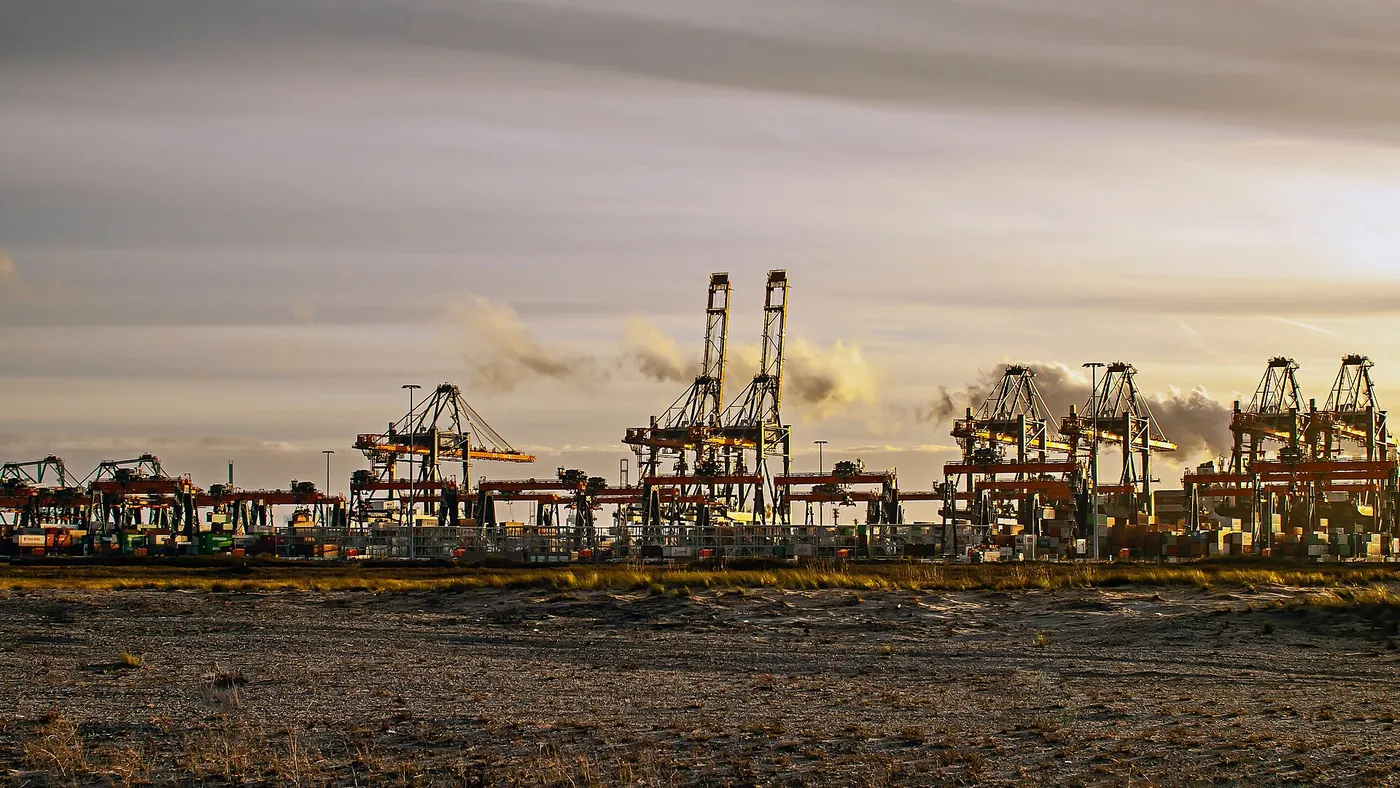
In manufacturing, Poland combines strong growth with a large industrial base and lower costs than western Europe. Spain and Portugal are attracting energy-intensive industry thanks to cheaper renewable electricity. Italy and France remain world centres for luxury, design, jewellery and precision engineering.
What are the main risks of investing in Europe?
- Energy and inflation: the 2026 energy shock pushed inflation to 3.8% in September 2026 (Eurostat). It may keep interest rates and costs higher.
- Trade policy: the EU–US joint statement of August 2025 set a 15% ceiling on US tariffs for most EU goods, but trade policy can change quickly.
- Public finances: the Commission expects the EU's government deficit to rise from 3.1% of GDP in 2025 to 3.6% in 2027, which could lead to tax changes.
- Regulation and permits: grid congestion, environmental permits and complex rules (AI Act, sustainability reporting) can delay projects.
- Housing policy: several countries are tightening rules on short-term rentals and foreign property buyers.
This article is general information only and is not investment, legal or tax advice.
How Yazdan Invest can help
Yazdan Invest is an international investment group headquartered in Muscat, Oman, with partners in Spain and the Netherlands. We are developing tourism projects in Spain, work with jewellery and fragrance designers in France, and are setting up gold supply from Italy. Learn more about our tourism projects in Spain and our design work in France, or contact us to discuss a European project.
Frequently asked questions
Which European country has the best growth outlook for 2026?
Among EU members covered here, Poland (3.5%) and Spain (2.4%) have the strongest 2026 growth forecasts, according to the European Commission's Spring 2026 forecast. Greece (1.8%) and Portugal (1.7%) also grow faster than the EU average of 1.1%.
Can I still get a golden visa in Spain?
No. Spain ended its golden visa programme on 3 April 2025 under Organic Law 1/2025. Other Spanish residence permits, for example for entrepreneurs or highly qualified professionals, have their own requirements, and you should take legal advice.
Does Portugal still offer a golden visa?
Yes, but not through real estate, which was removed in October 2023. Qualifying routes include a €500,000 investment in eligible funds, job creation and cultural or research donations. Since 19 May 2026, most non-EU nationals need 10 years of legal residence to apply for Portuguese citizenship.
What happens when the EU Recovery Fund ends in 2026?
Payments under the Recovery and Resilience Facility must be completed by 31 December 2026. After that, EU structural funds, national programmes such as Germany's €500 billion infrastructure fund, and private capital are expected to carry more of the investment load.
Which sectors in Europe receive the most policy support?
Clean energy and grids (REPowerEU), defence (ReArm Europe and SAFE), semiconductors (the Chips Act) and digital infrastructure all benefit from dedicated EU or national funding in 2026.
Sources
- European Commission: Spring 2026 Economic Forecast
- European Commission: Economic forecast for Germany
- European Commission: Economic forecast for Spain
- European Commission: Economic forecast for Portugal
- European Commission: Economic forecast for the Netherlands
- European Commission: Economic forecast for Poland
- European Commission: Economic forecast for France
- European Commission: Economic forecast for Italy
- European Commission: Economic forecast for Greece
- Eunews: Euro area September 2026 inflation confirmed at 3.8% (Eurostat)
- Hellenic Shipping News: Euro area GDP Q2 2026 (Eurostat)
- European Commission: EU agrees stronger legislation on renewable energy (March 2023)
- S&P Global: EU details €300B REPowerEU strategy
- Gibson Dunn: EU AI Act Omnibus agreement
- Software Improvement Group: EU AI Act summary (2026 update)
- European Commission: European Chips Act
- European Commission press corner via Lovguiden: RRF has disbursed €450 billion (October 2026)
- Noerr: Bundestag approves debt brake exemption and special funds
- EEAS: Council adopts €150 billion SAFE instrument
- Government of Norway: Historic decision at NATO Summit
- La Moncloa: International tourists and spending in Spain, 2025 (INE)
- KPMG: Spain abolishes golden visa
- Global Citizen Solutions: Portugal golden visa changes
- Portugal.com: Portugal's 10-year citizenship change
- IBA: The Greek golden visa after the 2024–2026 overhaul
- AJOT: Throughput in the port of Rotterdam 2025
- Portugal Global: EU–US Joint Statement on trade and investment