US Investment Opportunities 2026: Key Markets and Hubs
US investment opportunities in 2026: FDI data, AI and chip hubs, IRA changes, Sun Belt real estate, EB-5 minimums, CFIUS and the new tariff regime.
Investment opportunities in the United States in 2026 are concentrated in a handful of specialised markets: AI and software in Silicon Valley, Austin and Seattle, semiconductor fabs built under the CHIPS Act, life sciences in Boston, finance in New York and Miami, and logistics and housing in the fast-growing Sun Belt. The US remains the world's largest destination for foreign direct investment, with a stock of $5.86 trillion at the end of 2025 according to the Bureau of Economic Analysis (BEA), but investors now have to plan around new tariffs, tighter screening and a reshaped clean-energy incentive regime.
Key takeaways
- Foreign direct investment in the US reached a position of $5.86 trillion at the end of 2025, up $266 billion on 2024 (BEA, July 2026).
- New foreign direct investment spending rose 49.5% to $232.2 billion in 2025, but 94% of it was acquisitions rather than new greenfield projects (BEA, June 2026).
- Semiconductor clusters in Arizona, Texas, Ohio and New York and AI hubs on both coasts and in Texas are the most capital-intensive growth stories.
- The 2025 "One Big Beautiful Bill Act" cut back many Inflation Reduction Act clean-energy credits, especially for wind, solar and electric vehicles.
- EB-5 still requires $800,000 in a targeted employment area or $1,050,000 elsewhere, with an inflation adjustment due on 1 January 2027.
- After the Supreme Court struck down emergency (IEEPA) tariffs in February 2026, the administration moved to Section 122 and then Section 301 duties, so trade costs remain a live variable.
How much foreign direct investment does the United States attract?
According to the BEA's release of 21 July 2026, the stock of foreign direct investment in the US was $5.86 trillion at the end of 2025. Manufacturing accounted for 42.8% of that position, led by chemicals, followed by finance and insurance and wholesale trade. By immediate parent country, the largest investors were Japan, the Netherlands, Canada and the United Kingdom; by ultimate owner, Japan, Canada and Germany led.
Flows tell a slightly different story. The BEA's survey of new investment, published on 10 June 2026, shows first-year expenditures by foreign investors of $232.2 billion in 2025, up from 2024. Of that, $218.4 billion was spent acquiring existing US companies, while greenfield spending on new or expanded establishments was only $13.8 billion. California ($59.7 billion), Texas ($21.5 billion) and Pennsylvania ($20.9 billion) received the most new investment.
Washington still courts investors: the SelectUSA Investment Summit of 3–6 May 2026 drew more than 5,500 attendees, and the Department of Commerce linked over $56 billion in new and planned commitments to it.
Which US hubs lead in technology and artificial intelligence?
Silicon Valley and the San Francisco Bay Area remain the centre of venture capital, AI model development and software, which helps explain why California topped the BEA's state ranking for new foreign investment in 2025. Seattle combines cloud computing, e-commerce and aerospace engineering talent. Austin has grown into a second-tier tech capital, helped by Texas's lack of a personal state income tax, a large university system and major manufacturing investments nearby.
For foreign investors, the realistic entry points in these hubs are usually minority stakes in funds or companies, data-centre and power infrastructure, specialised office and lab space, and services that support fast-growing tech firms, rather than direct competition with the largest platforms.
Where are the CHIPS Act semiconductor fabs being built?
The CHIPS and Science Act of 2022 set aside about $52 billion to rebuild chip manufacturing, and four states now host flagship projects:
- Arizona: TSMC has raised its planned US investment to $165 billion for six wafer fabs, two advanced packaging plants and an R&D centre in Phoenix. Its first fab began volume production in the fourth quarter of 2024 (Arizona Technology Council, April 2025).
- Texas: Samsung's fab in Taylor is being prepared for advanced production, and in July 2025 Tesla signed a reported $16.5 billion contract for chips to be made there.
- Ohio: Intel said in February 2025 that its first New Albany fab would be completed in 2030 and start operations around 2031, years later than first planned.
- New York: Micron broke ground on 16 January 2026 on a planned $100 billion memory complex in Clay, near Syracuse, with up to four fabs over about two decades.
These projects generate demand for suppliers, specialty chemicals and gases, industrial real estate, housing and engineering services in the surrounding regions, which is often where mid-sized foreign investors find opportunities.
What happened to the IRA clean-energy incentives in 2025?
The Inflation Reduction Act of 2022 created generous tax credits for clean power, storage, hydrogen, electric vehicles and domestic manufacturing. The "One Big Beautiful Bill Act", signed on 4 July 2025, significantly narrowed them:
- Wind and solar projects keep the technology-neutral credits only if construction began by 4 July 2026 or the project is placed in service by 31 December 2027.
- Energy storage, geothermal and hydropower keep a longer runway, with credits phasing down from 2034.
- Consumer and commercial electric-vehicle credits ended in 2025.
- The clean hydrogen credit is limited to facilities that begin construction before 2028.
- New "foreign entity of concern" rules restrict credits where projects or components have certain links to China and other designated countries.
Texas, which leads the US in wind and utility-scale solar, still offers large opportunities in grid, storage and gas-fired power for data centres, but investors should model projects on today's credit rules rather than the original IRA.
Which other specialised markets should investors watch?
Life sciences in Boston and Cambridge
The Boston–Cambridge cluster around Harvard, MIT and Kendall Square is the leading US hub for biotech research. After the post-pandemic boom, lab space has become more competitive, which can favour selective investors in companies, services and well-located facilities.
Finance in New York and Miami
New York remains the main centre for capital markets, asset management and insurance. Miami has attracted hedge funds, family offices and Latin American wealth, making it a gateway for investors from the Americas and beyond.
Logistics and ports in Texas and Georgia
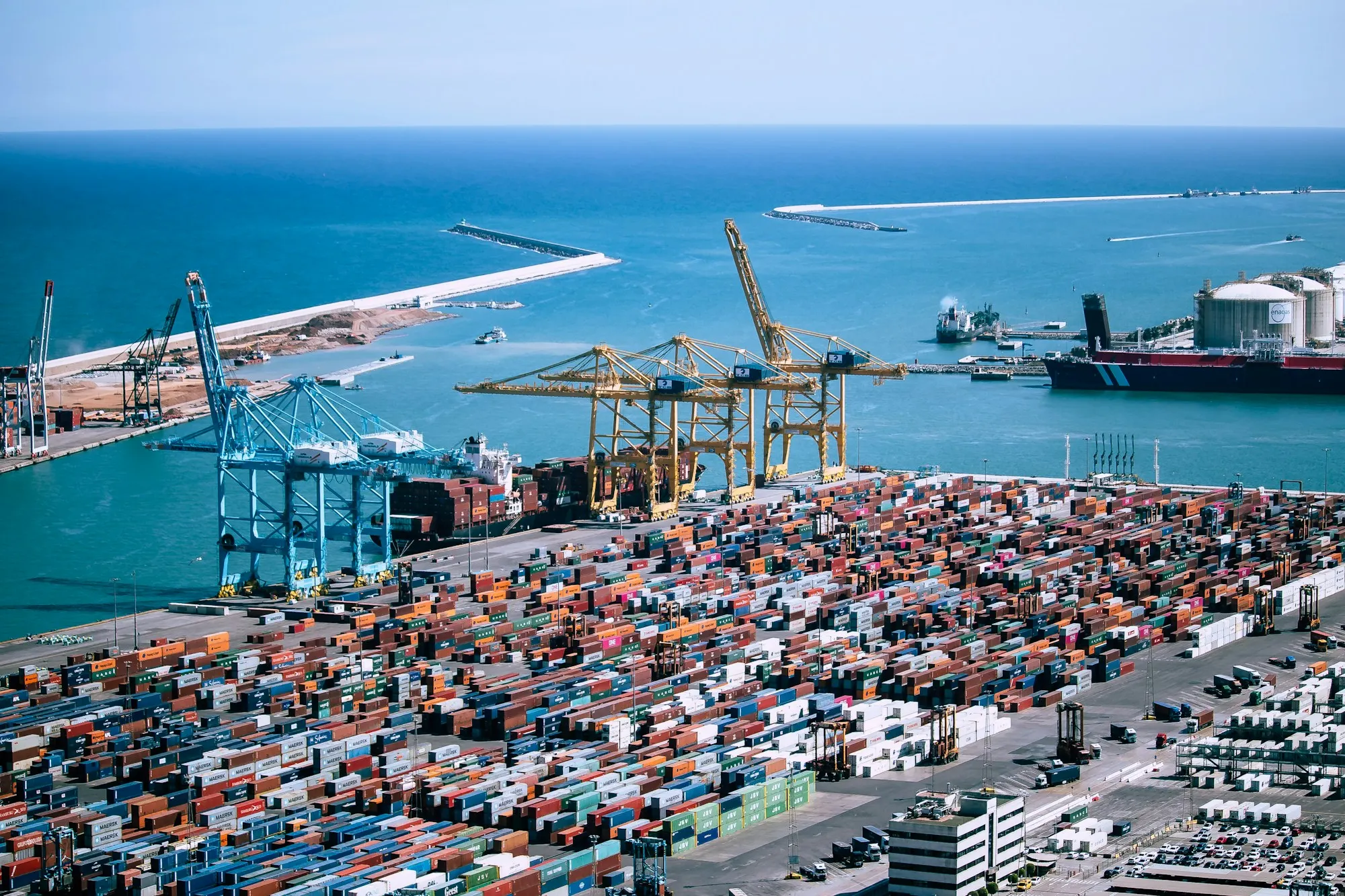
Port Houston handled 4.3 million TEU and 54.5 million short tons in 2025, its best year so far. The Port of Savannah in Georgia moved about 5.67 million TEU in fiscal year 2026, which ended in June (Georgia Ports Authority, July 2026). Warehousing, cold chain and trucking around these gateways serve the fast-growing southern and Midwestern markets.
Sun Belt real estate and agriculture
Population growth continues to favour the South. According to Census Bureau estimates for July 2024–July 2025, Texas added 391,243 residents, Florida 196,980 and North Carolina 145,907, while South Carolina grew fastest in percentage terms (1.5%). This supports demand for rental housing, build-to-rent communities and logistics space. Investors should note that several states now restrict land purchases by buyers linked to certain countries; Texas's SB 17, for example, applies from 1 September 2025 to acquisitions by persons and entities from countries named as national security threats. Farmland and food processing remain attractive but are subject to federal reporting under the Agricultural Foreign Investment Disclosure Act and growing state scrutiny.
US investment hubs and sectors at a glance
| Hub / state | Main sector | Recent data point |
|---|---|---|
| California (Silicon Valley, Bay Area) | AI, software, venture capital | $59.7bn of new FDI in 2025, highest of any state (BEA) |
| Washington (Seattle) | Cloud, e-commerce, aerospace | Major technology employers and engineering talent |
| Texas (Austin, Houston, Taylor) | Tech, chips, energy, ports | $21.5bn of new FDI in 2025 (BEA); Port Houston 4.3m TEU in 2025 |
| Arizona (Phoenix) | Semiconductors | TSMC plan of $165bn for six fabs |
| Ohio (New Albany) | Semiconductors | Intel's first fab now expected around 2030–2031 |
| New York (Clay; New York City) | Memory chips; finance | Micron $100bn campus started January 2026 |
| Massachusetts (Boston, Cambridge) | Life sciences | Leading US biotech research cluster |
| Florida (Miami) | Finance, wealth management, real estate | Florida added 196,980 residents in 2024–25 (Census) |
| Georgia (Savannah) | Ports, logistics | About 5.67m TEU in FY2026 (GPA) |
How does the EB-5 immigrant investor programme work in 2026?
Under the EB-5 Reform and Integrity Act of 2022, an investor must place at least $1,050,000 in a new commercial enterprise, or $800,000 if the project is in a targeted employment area (rural or high-unemployment) or a qualifying infrastructure project. Each investment must create at least 10 full-time jobs for qualifying US workers. USCIS states that the Regional Center Program is authorised through 30 September 2027.
Two dates matter for anyone considering EB-5 now. Petitions filed by 30 September 2026 are protected by the law's grandfathering clause if the Regional Center Program later lapses. Separately, the law requires the investment amounts to be adjusted for inflation on 1 January 2027, so the minimums are expected to rise once USCIS publishes new figures.
The administration also launched a separate "Gold Card" route starting at $1 million in December 2025, but in April 2026 the Commerce Secretary told Congress that only one applicant had been approved so far (Gulf News, April 2026). EB-5 remains the established, statute-based option.
What do CFIUS and tariffs mean for foreign investors in 2026?
CFIUS screening. The Committee on Foreign Investment in the United States reviews foreign acquisitions in sensitive technology, critical infrastructure, personal data and real estate near sensitive sites. The February 2025 America First Investment Policy promised faster treatment for allies and closer scrutiny for adversaries. A Known Investor Program, piloted in 2025, is designed to give frequent, low-risk investors an expedited review; Treasury sought public comment on it in February 2026.
Tariffs. On 20 February 2026 the Supreme Court ruled 6–3 in Learning Resources v. Trump that the International Emergency Economic Powers Act does not authorise tariffs, striking down the "reciprocal" duties. A temporary 10% tariff under Section 122 took effect on 24 February 2026 and was replaced on 24 July 2026 by Section 301 duties of mostly 10% or 12.5%, with caps for the EU, Taiwan, Japan, Korea and Switzerland. Section 232 tariffs on steel, aluminium, cars, auto parts and copper continue separately. For investors, this strengthens the case for producing inside the US but makes imported inputs and equipment harder to price.
How Yazdan Invest can help
Yazdan Invest is an international investment group headquartered in Muscat, Oman, with partners in Europe and sourcing agents in China, and a trading network of more than 290 traders across Saudi Arabia and the Arab region. For investors weighing the US alongside the Gulf, our team can help structure an initial review of opportunities, connect trade and supply-chain needs with our international trade network, and coordinate with qualified US advisers. To discuss a project, please contact us.
This article is general information only and is not investment, legal, immigration or tax advice.
Frequently asked questions
How much foreign investment does the United States receive?
The BEA reports a foreign direct investment position of $5.86 trillion at the end of 2025. New foreign investment spending in 2025 was $232.2 billion, most of it for acquisitions of existing companies.
What is the minimum EB-5 investment in 2026?
It is $800,000 for projects in a targeted employment area or qualifying infrastructure project and $1,050,000 for other projects. The amounts are due to be adjusted for inflation from 1 January 2027.
Are the IRA clean-energy tax credits still available?
Some are. The 2025 One Big Beautiful Bill Act phased out electric-vehicle credits and set tight deadlines for wind and solar, while storage, geothermal and hydropower keep credits for longer.
Which US states are best for foreign investors?
It depends on the sector. California leads for technology, Texas for energy, chips and logistics, Arizona and New York for semiconductors, Massachusetts for life sciences, and Florida and New York for finance.
Do US tariffs affect foreign investors who build factories in the US?
Yes. Tariffs raise the cost of imported machinery and components, although they can also protect US-made output. Since July 2026, most countries face Section 301 duties of 10% or 12.5%, plus Section 232 tariffs on specific products such as steel and cars.
Sources
- BEA – Direct Investment by Country and Industry, 2025
- BEA – New Foreign Direct Investment in the United States, 2025
- US Department of Commerce – 2026 SelectUSA Investment Summit concludes
- USCIS – About the EB-5 Visa Classification
- CanAm Enterprises – The 2027 EB-5 investment amount increase
- Gulf News – Trump's gold card visa granted to one person so far
- Arizona Technology Council – TSMC to scale up to a gigafab cluster in Arizona
- DatacenterDynamics – Intel delays Ohio chip fabs
- WEOS – Micron breaks ground in Central New York
- Electronics360 – Tesla and Samsung foundry pact
- Kirkland & Ellis – OBBBA changes to green energy tax credits
- Pillsbury – Supreme Court invalidates IEEPA tariffs
- Morgan Lewis – US rebuilds global tariff program under Section 301
- Gibson Dunn – CFIUS Known Investor Program begins to take shape
- Port Houston – record 2025 volumes
- The Trucker – Georgia Ports fiscal year 2026
- NAHB Eye on Housing – US population growth slows in 2025 (Census data)
- Greenberg Traurig – Texas SB 17 restricts foreign ownership of real property