Gold Market 2026: Prices, Demand and What Gulf Buyers Should Know
Gold hit a record $5,589 in January 2026, then fell about 27%. Q3 2026 demand data, Dubai gram prices and what the correction means for buyers and jewellers.
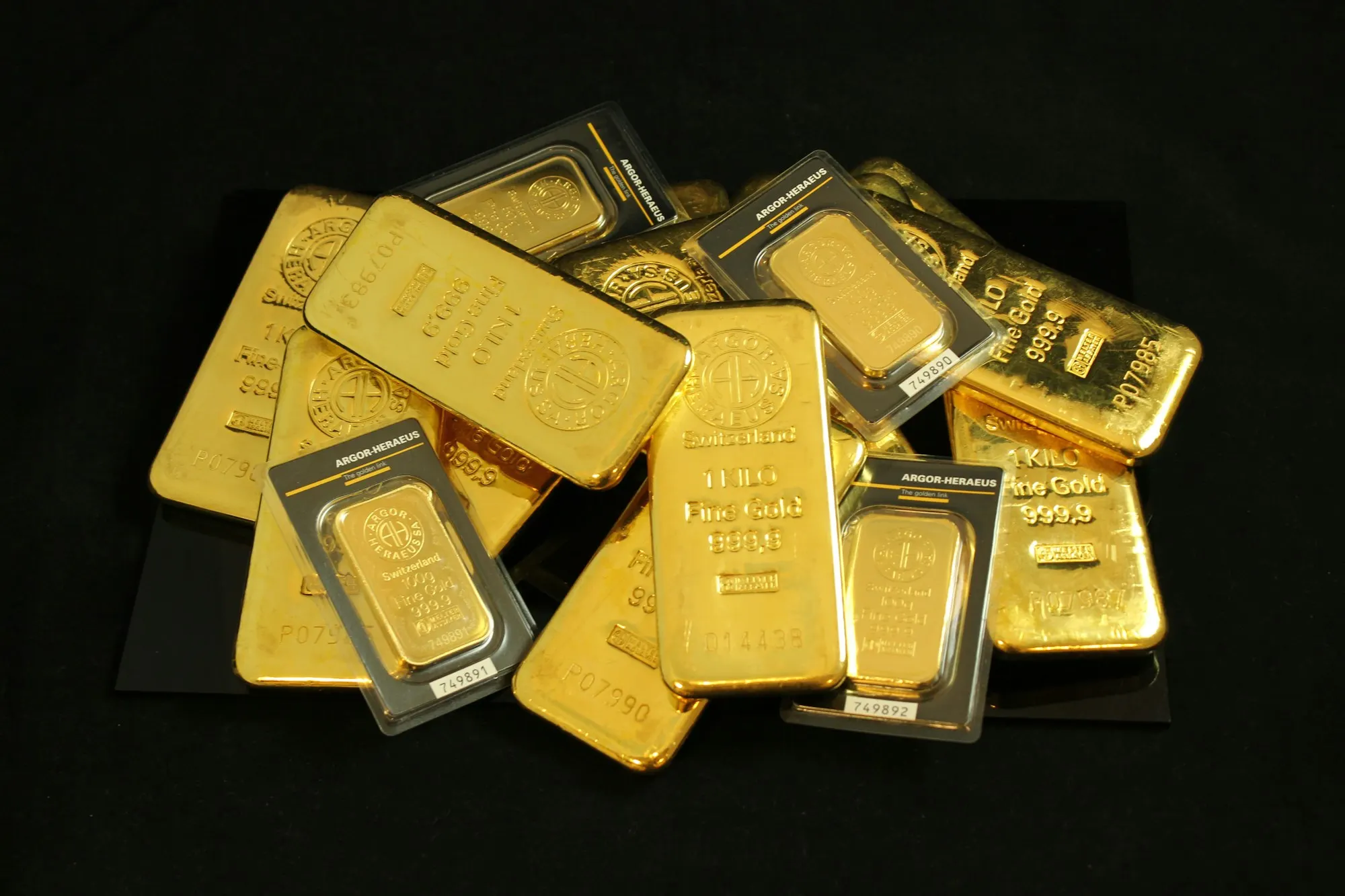
Gold is still historically expensive in November 2026, but it is no longer at its peak. After hitting a record of $5,589.38 per ounce on 28 January 2026 (CBS News), the price fell back to roughly $4,000–4,060 in early November, about 27% below the high. Demand has shifted with it: central banks and ETFs are buying heavily, while jewellery buyers are purchasing fewer grams, according to the World Gold Council's Q3 2026 data.
Key takeaways
- Gold reached an all-time high of $5,589.38/oz on 28 January 2026 and traded around $4,020–4,060 on 4 November 2026, roughly 27% lower.
- Total gold demand in the first nine months of 2026 was 3,881 tonnes, almost matching the 2025 record, and worth a record $566 billion (World Gold Council, Q3 2026).
- Central banks bought 321 tonnes in Q3 2026 and 675 tonnes year-to-date, 6% more than a year earlier.
- Jewellery volumes fell 17% year-on-year to 313 tonnes in Q3 2026, the weakest third quarter in the WGC series, even though spending rose 2% to $43 billion.
- In Dubai, 22K gold cost Dh439.25 per gram on 3 November 2026, about Dh35 less than at Diwali 2025, and retailers report demand for lighter pieces and 18K designs.
What happened to the gold price in 2026?
The rally that began in 2025 turned into a sprint at the start of 2026. Gold opened 2025 at about $2,624 per ounce, passed $4,000 in the second half of that year and crossed $5,000 in January 2026 before setting its record of $5,589.38 on 28 January 2026, according to CBS News (February 2026).
Since then the market has corrected. Gold briefly slipped below $4,000 on 30 October 2026, as reported by Reuters, and was quoted at around $4,020–4,060 on 4 November 2026 after a rebound of 2–3% in a single session. Measured from the January record, that is a decline of roughly 27–28%.
Several forces drove the pullback. Expectations that US interest rates would stay "higher for longer" lifted bond yields and the dollar, which tends to weigh on a metal that pays no interest. The US Federal Reserve held its policy rate at 3.75%–4.00% on 28 October 2026. Market commentary also points to profit-taking after an extremely steep run, liquidation of ETF and futures positions, and some investors selling gold to cover losses elsewhere. The short rebound on 4 November came as the dollar and Treasury yields eased after the US midterm elections.
The correction is large, but gold remains far above where it started 2025. For buyers, the question is less "is gold cheap?" and more "is this a better entry than a year ago?"
Who is still buying gold in 2026?
The World Gold Council's Gold Demand Trends report for Q3 2026, published on 3 November 2026, shows a market where the buyers have changed rather than disappeared. Total demand including over-the-counter trading was 1,369 tonnes in Q3, only 1% lower than a year earlier. Over the first nine months, demand reached 3,881 tonnes, virtually level with the record 3,884 tonnes of 2025.
| Segment (Q3 2026) | Tonnes | Change vs Q3 2025 | Note |
|---|---|---|---|
| Central bank purchases | 321 | Higher | 675 t year-to-date, +6% y/y |
| Gold ETFs | +211 | Inflows | Reversed Q2 outflows |
| Bars and coins | 268 | -19% | Retail investors more cautious |
| Jewellery | 313 | -17% | Weakest Q3 in WGC data; value +2% to $43bn |
| Technology | — | +3% | Supported by AI-related electronics |
| Total demand (incl. OTC) | 1,369 | -1% | Nine months: 3,881 t |
Source: World Gold Council, Gold Demand Trends Q3 2026, as reported by ANI and PGurus (3 November 2026).
The standout is official-sector buying. Central banks added 321 tonnes in Q3 2026, and the WGC expects full-year purchases to at least match 2025. Institutional investors also came back: gold ETFs added 211 tonnes in the quarter after outflows in Q2. By contrast, households bought fewer bars and coins (down 19% to 268 tonnes), and jewellery volumes fell sharply.
Why are jewellery buyers buying fewer grams?
Price is the simple answer. The LBMA average gold price in Q3 2026 was $4,262 per ounce, 23% higher than a year earlier and the third-strongest quarterly average on record (WGC, Q3 2026). With each gram so expensive, consumers spent slightly more money in total ($43 billion, up 2%) but took home much less metal (313 tonnes, down 17%).
Retailers in the Gulf describe the same pattern. Jewellers interviewed by Gulf News in November 2026 said shoppers are keeping similar budgets but buying fewer grams, with best-sellers including lightweight chains, diamond pendants and everyday bangles. Stackable and contemporary designs are popular, and diamonds and coloured gemstones are being combined with gold to deliver a fuller look for less metal.
The WGC expects jewellery demand to moderate further, and notes that recycling has stayed surprisingly low: old-gold recycling fell 8% to 314 tonnes in Q3 2026, its lowest level in three years. Many owners appear to be holding on to their gold rather than selling into high prices.
How do gold prices look for buyers in Dubai and the Gulf?
Dubai is the region's benchmark retail market, and its daily reference rates show how the global correction is reaching shoppers. On 3 November 2026, 24K gold was Dh474 per gram and 22K was Dh439.25 per gram before making charges, according to Gulf News. On Diwali day 2025 (20 October 2025), the same rates were Dh512.25 and Dh474.25. That is a drop of about 7% in a year, despite all the volatility in between.
| Dubai reference rate (excl. making charges) | 24K per gram | 22K per gram |
|---|---|---|
| 20 October 2025 (Diwali 2025) | Dh512.25 | Dh474.25 |
| 3 November 2026 | Dh474.00 | Dh439.25 |
| Change | -Dh38.25 | -Dh35.00 |
Source: Gulf News, 3 November 2026.
Lower prices tend to bring buyers back. Emirates 24|7 reported on 25 October 2026 that UAE gold prices fell by between Dh12.25 and Dh20.50 per gram over one week, the largest weekly decline in nearly four months, with strong demand for 18K jewellery and for 20-gram and 50-gram bullion bars. Earlier in the year, Khaleej Times (June 2026) described a similar return of wedding and investment buyers after a price dip, with 22K gold the clear favourite among many customers.
The festive calendar matters too. Dhanteras falls on 6 November and Diwali on 8 November 2026, traditionally among the busiest gold-buying days for the large South Asian community in the UAE and wider Gulf.
What does the gold correction mean for jewellery and gold businesses?
For retailers, designers and traders, the 2026 market brings both pressure and opportunity:
- Design for lighter weights. Consumers are protecting their budgets, so collections built around lower gram weights, 18K alloys and gemstone accents match how people are actually buying.
- Manage price risk. Gold moved by hundreds of dollars per ounce within weeks in 2026. Businesses holding stock need a clear policy on hedging, pricing updates and rate-lock schemes; some Gulf retailers let customers lock a rate with an advance payment.
- Watch the investment channel. Demand for small bars (20–50 g) in the UAE shows that many retail customers treat gold as savings as well as adornment.
- Supply chains count. Mine output reached a third-quarter record of 1,071 tonnes in Q3 2026 (WGC), but recycled supply is scarce. Reliable sourcing of refined gold and finished jewellery, for example from established European manufacturing centres, is a competitive advantage.
- Know the festival and wedding seasons. Demand in the Gulf is strongly seasonal, and timing stock and promotions to Diwali, Eid and wedding season is basic but important.
For background on the most famous gems and pieces in history, see our article on the most expensive famous jewels.
What are the main risks for the rest of 2026?
The outlook depends heavily on US monetary policy and the dollar. If US data stays strong and rates rise further, gold could remain under pressure; analysts quoted in market commentary in early November 2026 discussed downside scenarios as well as a renewed rally. On the other hand, steady central-bank buying, renewed ETF inflows and geopolitical tension in and around the Gulf have repeatedly supported prices. The WGC itself notes that central-bank demand does not set a firm price floor.
For buyers, that means volatility is likely to continue. Comparing prices over several weeks, checking making charges separately from the metal price, and buying from reputable dealers with clear karat certification remain sensible habits. This article is general information only and is not investment, legal or tax advice.
How Yazdan Invest can help
Yazdan Invest is an international investment group headquartered in Muscat, Oman. Through Yazdan Jewellery, the group works with jewellery and fragrance designers in France, is setting up gold supply from Italy and is developing gold shops. Our trading network of more than 290 traders, mainly in Saudi Arabia and the wider Arab region, and our design partnerships in France give partners a practical route into the Gulf jewellery market.
If you are a jeweller, designer, supplier or investor exploring the gold and jewellery sector in Oman or the Gulf, contact our team or call +968 7733 3556.
Frequently asked questions
What was the highest gold price ever?
Gold's all-time high is $5,589.38 per ounce, reached on 28 January 2026, according to CBS News. Some outlets quote a slightly different intraday figure of around $5,595, depending on the data provider.
Why did gold fall in late 2026?
The main drivers were expectations of higher-for-longer US interest rates, a stronger dollar and higher bond yields, plus profit-taking after a very steep rally. Liquidation of ETF and futures positions added to the decline in October 2026.
Are central banks still buying gold?
Yes. Central banks bought 321 tonnes of gold in Q3 2026 and 675 tonnes in the first nine months of the year, 6% more than in the same period of 2025, according to the World Gold Council.
Is 22K or 18K gold more popular in the UAE?
22K remains the dominant choice for many South Asian customers, while Gulf jewellers report that Western customers prefer 18K pieces. With high prices, demand for 18K and lightweight designs has grown in 2026.
How much does gold cost per gram in Dubai now?
On 3 November 2026, Dubai reference rates were Dh474 per gram for 24K and Dh439.25 for 22K, excluding making charges (Gulf News). Prices change several times a day, so always check the current rate before buying.
Sources
- Central banks buy 321 tonnes of gold in Q3, lifting 2026 demand to 675 tonnes: World Gold Council — ANI (3 Nov 2026)
- Gold demand hits USD 566 billion in first nine months of 2026, says WGC — PGurus (3 Nov 2026)
- Highest gold price in history: how it has changed from 2025 to 2026 — CBS News (Feb 2026)
- Gold tops $4,000 as reported buying covers 37% of Q3 central-bank demand — TechStock² (4 Nov 2026)
- Gold price outlook after a 27% fall from record — Discovery Alert (2 Nov 2026)
- Dhanteras 2026: what gold trends are UAE buyers looking for — Gulf News (3 Nov 2026)
- UAE gold prices fall by up to AED 20.50 per gram as demand rises — Emirates 24|7 (25 Oct 2026)
- Gold prices in Dubai: falling rates bring UAE jewellery shoppers back — Khaleej Times (Jun 2026)