Investing in Saudi Arabia 2026: FDI, New Rules and War Risks
Saudi FDI inflows rose 33.5% to SAR 159bn in 2025, but the IMF sees a 2026 contraction. New investment and property rules, entry routes and risks explained.
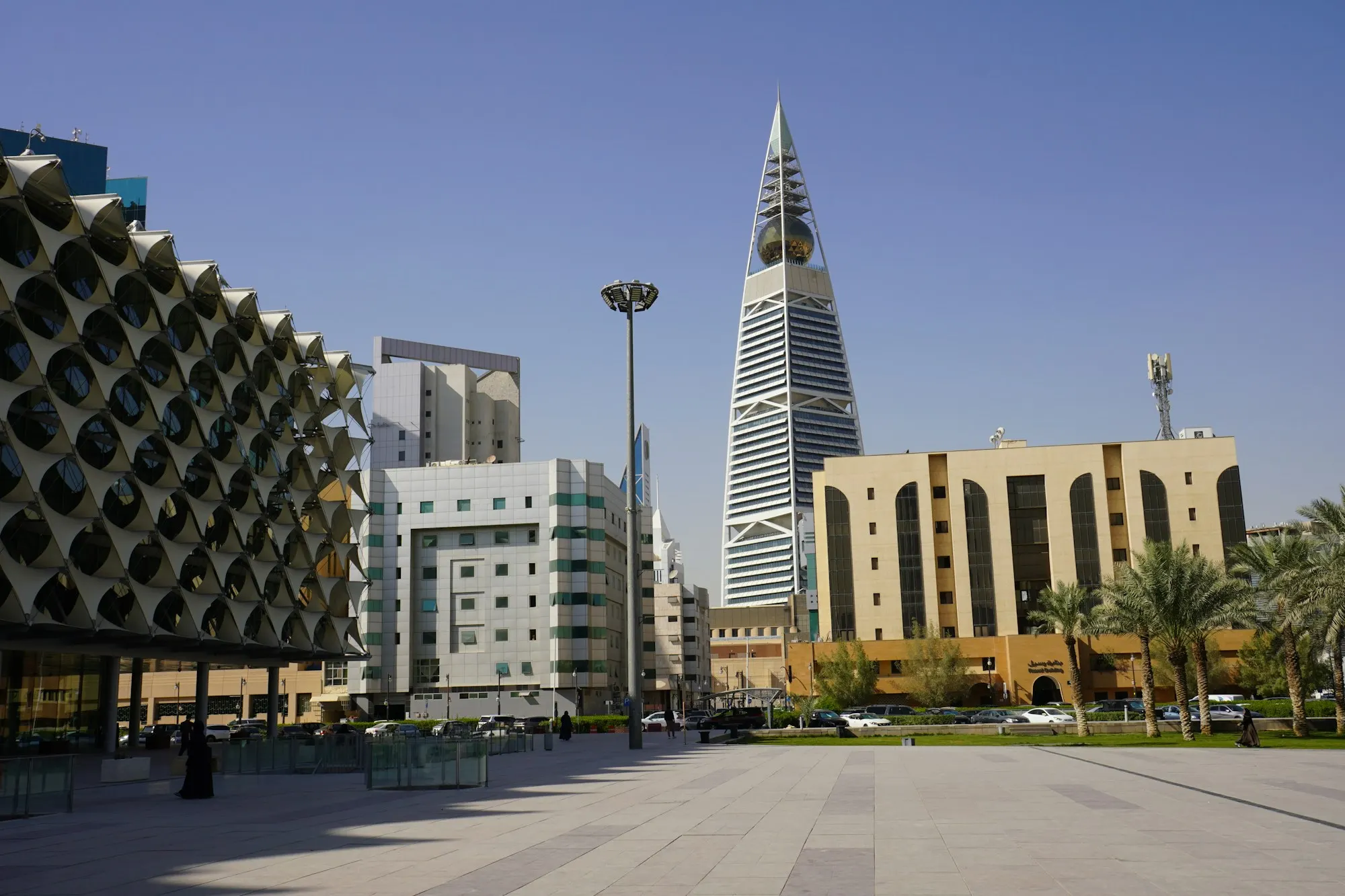
Investing in Saudi Arabia in 2026 means weighing two very different signals. Foreign direct investment (FDI) inflows rose 33.5% to SAR 159.1 billion in 2025, according to the General Authority for Statistics (GASTAT, 2026). New laws now let foreign investors register instead of applying for a licence, and let non-Saudis buy property in designated areas. At the same time, the regional war and the closure of the Strait of Hormuz led the IMF to forecast a 3.3% contraction for the Saudi economy in 2026 (IMF, October 2026). For long-term investors, the reforms are real, but timing, routes and risk planning matter more than they did a year ago.
Key takeaways
- FDI inflows hit a record SAR 159.1 billion (about $42 billion) in 2025, led by construction and manufacturing (GASTAT, 2026).
- Licensing became registration. Under the Investment Law in force since February 2025, most foreign investors register with the Ministry of Investment (MISA) rather than obtaining an investment licence.
- Property is opening up. The updated law on real estate ownership by non-Saudis took effect in January 2026, limited to areas the government designates.
- 2026 is a difficult year. The IMF projects a 3.3% contraction in 2026 and a 7.9% rebound in 2027, assuming Hormuz reopens gradually from March 2027.
- Routes matter. Red Sea ports and the Oman–Saudi land road through the Empty Quarter have become important alternatives to Gulf shipping lanes.
How much foreign investment did Saudi Arabia attract in 2025?
GASTAT's annual FDI figures, released in October 2026, show the strongest inflow year on record. Construction was the largest destination for new money, followed closely by manufacturing. The total stock of foreign investment in the Kingdom passed SAR 1 trillion for the first time, according to the Saudi Press Agency (SPA, 2026), which notes that inflows in 2025 were five times their 2017 level.
There is an important nuance. Outflows (money leaving foreign-owned businesses or Saudi entities investing abroad) almost doubled in the same year, so net FDI grew only 1.7%. Headline inflows are a useful sign of investor appetite, but net flows give a more sober picture.
| Indicator (2025) | Value | Change vs 2024 |
|---|---|---|
| FDI inflows | SAR 159.1 billion (about $42.3 billion) | +33.5% |
| FDI outflows | SAR 77.7 billion | +98.5% |
| Net FDI flows | SAR 81.4 billion | +1.7% |
| FDI stock (end of year) | SAR 1.06 trillion | +8.3% |
| Largest inflow sector | Construction, SAR 34.5 billion (21.7%) | — |
| Second-largest inflow sector | Manufacturing, SAR 33.4 billion (21%) | — |
Source: GASTAT via Arab News and SPA, October 2026.
By stock, manufacturing holds the biggest share at 27%, followed by wholesale and retail trade (14.9%) and finance and insurance (12.6%). The UAE is the largest investor by stock, ahead of Luxembourg and the United States (GASTAT, 2026). The national goal is roughly $100 billion of FDI a year by 2030, so 2025 inflows reached a little over 40% of that target.
What changed under the new Saudi Investment Law?
The Investment Law (Royal Decree M/19 of August 2024) came into force in February 2025, and its implementing regulations followed. For foreign investors, the practical changes are:
- Registration instead of licensing. Foreign investors register with MISA before starting activity. One registration can cover activities in several sectors, according to an analysis by Clyde & Co (2025).
- Equal treatment. Foreign investors are to be treated like local investors in comparable circumstances.
- A complaints channel. MISA must run a process for investor complaints, without removing the right to go to court or arbitration.
- Annual updates. Registered investors must keep their information current each year, or they may need to register again.
- A restricted list. A screening committee keeps a list of activities that are restricted or closed to foreign investors.
According to the US State Department's 2026 Investment Climate Statement, 100% foreign ownership is permitted in many sectors. Areas such as upstream oil exploration, certain ground transport, military manufacturing and most telecom services remain closed or limited. Some professions, including accounting and auditing, architecture and certain healthcare services, still need a Saudi partner. The same report notes that companies describe implementation as still in progress, so checking the current rules for your exact activity is essential.
Which entry routes do foreign companies use?
Most investors choose between a mainland company, a special economic zone (SEZ) and, for larger groups, a regional headquarters (RHQ). The State Department's 2026 report summarises the main differences:
| Route | Who it suits | Key features (as reported in 2026) |
|---|---|---|
| Mainland company | Most trading, services and industrial businesses | Register with MISA; 20% corporate income tax for foreign shareholders; Saudization quotas apply |
| Special economic zone | Manufacturers, logistics, pharma, cloud and maritime businesses | 5% corporate income tax for up to 20 years; VAT and customs exemptions; no Saudization quotas for the first five years |
| Regional headquarters | Multinationals that want government contracts | Generally required to win most government contracts; 30-year corporate tax relief; 10-year exemption from Saudization quotas |
The four SEZs listed in the report are Ras Al-Khair (maritime), Jazan (basic industries), King Abdullah Economic City (automotive, consumer goods and pharmaceuticals) and the Cloud Computing SEZ. Value-added tax is 15%, and Saudi shareholders pay 2.5% zakat instead of income tax.
Retail and wholesale businesses can be fully foreign-owned, but the State Department report cites a minimum capital of $8 million for that route. Smaller traders often work instead through Saudi distributors, agents or partners.
Can foreigners buy property in Saudi Arabia in 2026?
Yes, within limits. The updated Law of Real Estate Ownership by Non-Saudis took effect in January 2026, 180 days after publication. According to the Real Estate General Authority (REGA), it covers resident and non-resident individuals, foreign companies, funds and Saudi companies with foreign shareholders.
- Where: only in areas listed in a Geographic Scope Document approved by the Council of Ministers. In Riyadh and Jeddah, ownership applies only within specific zones.
- Makkah and Madinah: ownership is limited to Muslim individuals and certain Saudi companies with foreign shareholders, in specific areas only.
- Costs: REGA says the total charge on a disposal by a non-Saudi can reach 10%: the 5% real estate transaction tax plus an additional fee of up to 5%.
- Registration: all rights must be recorded in the national Real Estate Registry, and foreign companies must first register with MISA.
The Premium Residency programme can complement property ownership. When five new categories were announced in January 2024, they included a real estate owner route (residential property worth at least SAR 4 million) and an investor route (at least SAR 7 million invested and 10 jobs created), as reported by Gulf News. Thresholds can change, so confirm them with the official platform before acting.
How is the regional war affecting the Saudi outlook?
The picture changed sharply in 2026. In its July 2026 Article IV review, the IMF said the economy grew 4.6% in 2025 but that the war in the Middle East had disrupted trade, oil exports and confidence. Its October 2026 World Economic Outlook then cut the Saudi forecast to a 3.3% contraction for 2026, followed by 7.9% growth in 2027, as reported by The National.
| Economy | IMF 2026 growth forecast | IMF 2027 growth forecast |
|---|---|---|
| Saudi Arabia | −3.3% | +7.9% |
| UAE | −3.9% | +7.7% |
| Oman | +4.1% | not reported |
| MENA region | −2.0% | not reported |
Source: IMF World Economic Outlook, October 2026, via The National.
The IMF noted that Saudi Arabia's alternative export routes, especially the East–West pipeline to Red Sea ports, softened the blow compared with neighbours that depend more on Hormuz. Investor events have also been affected: the Future Investment Initiative, planned for 26–29 October 2026 in Riyadh, was postponed to 2027 (Gulf News, 2026). For investors, this means more due diligence on supply routes, insurance, contract terms and project timelines, rather than abandoning long-term plans.
Why does Oman matter for Saudi trade right now?
Oman is the only GCC economy the IMF expects to grow in 2026, and its main ports sit outside the Strait of Hormuz. That has made the Sultanate a practical gateway to the Saudi market.
- The Empty Quarter road. The 725 km road from Ibri in Oman to Saudi Arabia, completed in 2023, cut travel time by about 16 hours. Oman–Saudi trade reached OMR 473 million in the first quarter of 2025, up 22% (AGBI, 2025).
- A new green corridor. In August 2026, Saudi and Omani companies agreed to set up a "green" land corridor on that road to move cargo around Hormuz (AGBI, 2026).
- Port activity. Salalah Port's revenue rose about 20% to OMR 51 million in the first half of 2026, with cargo volumes up 15% (AGBI, 2026).
For companies that want to serve Saudi customers while keeping a base in a growing, stable economy, an Omani company or free-zone presence combined with Saudi distribution partners can be worth considering. Our guides to Oman's free zones and the Port of Salalah explain those options in more detail.
Which sectors look most promising for foreign investors?
Based on where money is already flowing and where the government is opening up, these sectors stand out:
- Construction and building materials, the largest destination for FDI inflows in 2025.
- Manufacturing, which holds the largest share of the FDI stock and benefits from SEZ incentives.
- Logistics and supply-chain services, as Red Sea ports and land corridors gain importance.
- Wholesale and retail trade, through distributors and partners for smaller players.
- Real estate, now that non-Saudis can own property in designated zones.
- Digital services and fintech, with SAMA launching open banking licences in March 2026 (US State Department, 2026).
This article is general information only and is not investment, legal or tax advice.
How Yazdan Invest can help
Yazdan Invest is headquartered in Muscat and trades with a network of more than 290 traders, especially in Saudi Arabia and the wider Arab region. We help businesses explore market entry, sourcing and trade partnerships through our international trade network. If an Omani base suits your plans, our Oman Register department handles company formation and government services in Oman. To discuss your plans, contact us or call +968 7733 3556.
Frequently asked questions
Do foreigners still need a MISA licence to invest in Saudi Arabia?
In most cases, no. Since the Investment Law took effect in February 2025, foreign investors register with the Ministry of Investment instead of obtaining an investment licence. Some activities remain restricted and need special approval, and sector regulators may still require their own permits.
How much FDI did Saudi Arabia receive in 2025?
GASTAT reported FDI inflows of SAR 159.1 billion in 2025, up 33.5% from 2024. Net flows, after outflows, were SAR 81.4 billion, up 1.7%. The total FDI stock reached about SAR 1.06 trillion.
Can a non-resident foreigner buy property in Saudi Arabia?
Yes, since January 2026 non-resident individuals can own property, but only in areas listed in the government's Geographic Scope Document. Non-residents can begin the process through Saudi embassies and consulates. Disposal charges can reach 10% in total.
What is the corporate tax rate for foreign companies in Saudi Arabia?
Foreign shareholders generally pay 20% corporate income tax, while Saudi shareholders pay 2.5% zakat. Companies in special economic zones can benefit from a 5% rate for up to 20 years, according to the US State Department's 2026 report. VAT is 15%.
Is 2026 a good time to enter the Saudi market?
It depends on your sector, time horizon and risk tolerance. The IMF expects a contraction in 2026 and a strong rebound in 2027, but that depends on shipping through Hormuz resuming. Many investors use this period to prepare registrations, partners and routes rather than to commit large capital immediately.
Sources
- Saudi Arabia's FDI inflows jump 33.5% to $42.4bn: GASTAT — Arab News
- Saudi Arabia's FDI Inflows Rise 33.5% in 2025, Stock Reaches SAR1.059 Trillion — Saudi Press Agency
- 2026 Investment Climate Statement: Saudi Arabia — US Department of State
- Saudi Arabia: Implementing Regulations of the Investment Law — Clyde & Co
- Q&A on the Updated Law of Real Estate Ownership by Non-Saudis — REGA
- Saudi Arabia's Real Estate Ownership by Non-Saudis is in Effect — Middle East Briefing
- Saudi Arabia: 5 new premium residency options launched — Gulf News
- IMF Concludes 2026 Article IV Consultation with Saudi Arabia — IMF
- IMF cuts 2026 growth forecasts for Gulf economies due to prolonged Hormuz closure — The National
- Saudi Arabia postpones flagship FII investment conference to 2027 — Gulf News
- New desert road boosts Oman-Saudi trade — AGBI
- Oman increases logistics revenues by offering Hormuz alternative — AGBI